
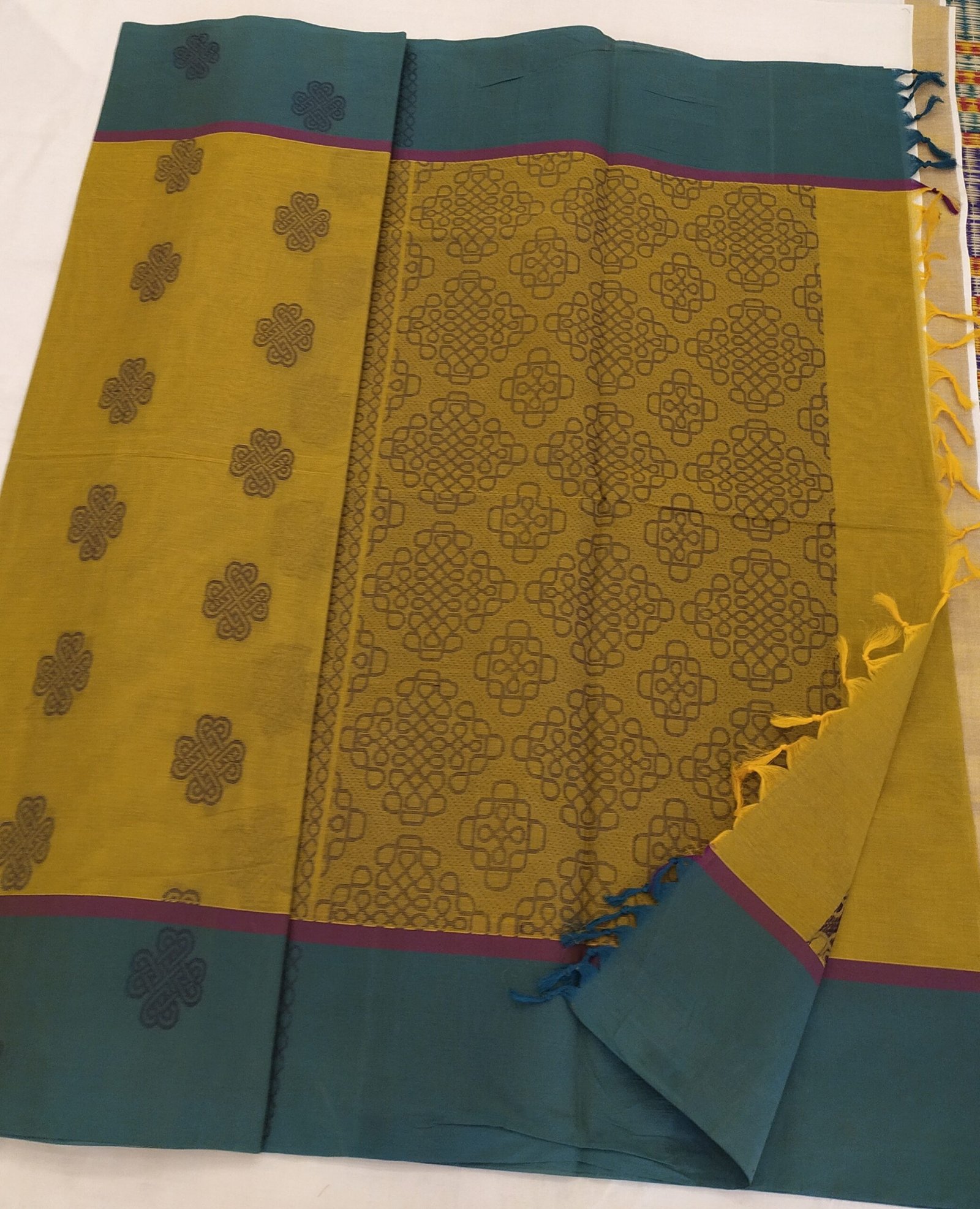
Negamam Cotton Saree
The Unheard Rhythm of the Loom: Unravelling the Legacy of the Negamam Cotton Saree
Deep in the heart of Tamil Nadu lies a village where the air hums with the rhythmic clatter of handlooms. Here, the Negamam cotton saree is not just woven; it is brought to life. Discover the history, the artistry, and the enduring legacy of South India’s most elegantly understated drape.
Amidst the bustling and vibrantly diverse textile landscape of India, where heavy brocades and shimmering silks often steal the sartorial spotlight, there exists a humble yet fiercely elegant contender. It is a garment that has draped generations of women in unparalleled grace, offering a masterclass in the beauty of simplicity. Enter the Negamam cotton saree—a masterpiece of traditional Indian handloom that speaks volumes without ever raising its voice.
Often affectionately referred to as the “village cot saree,” the Negamam weave is a testament to the enduring skill of Tamil Nadu’s artisans. But what exactly goes into the making of this textile marvel? From the moisture-laden winds of the Western Ghats to the tireless hands of the weavers, the creation of a Negamam cotton saree is a fascinating journey of culture, climate, and unparalleled craftsmanship.
The Geographical Cradle: Periya Negamam
To understand the soul of the Negamam saree, one must first travel to its birthplace. Periya Negamam is a serene, picturesque town panchayat located about 15 kilometres from Pollachi in the Coimbatore district of Tamil Nadu. Lined with impeccably clean streets, traditional homes featuring cow-dung-washed porches, and the quintessential village temple, Negamam feels like a place where time has gracefully paused.
However, the town’s geographical location is not just a matter of scenic beauty; it is a critical ingredient in the saree’s creation. The region benefits immensely from the moisture-laden winds blowing in from the majestic Western Ghats. This unique microclimate—particularly peaking between the months of June and November—acts as a natural catalyst, keeping the cotton yarn supple and preventing it from snapping during the rigorous handloom process. It is this very breeze that breathes life into the 80s count combed cotton, ensuring the fabric achieves its signature density and crispness.
The Anatomy of a Masterpiece
In the world of textiles, the quality of a fabric is often measured by its foundational architecture. The traditional Negamam cotton saree is woven using superior 80s count cotton yarn for both the warp (the longitudinal threads) and the weft (the transverse threads). What truly sets it apart from other sheer cottons is its remarkable thickness and opacity. A genuine Negamam saree boasts an average of 86 to 90 picks per inch (PPI). This high density results in a fabric that is highly durable, yet incredibly breathable—a crucial requirement for the sultry, humid climates of South India.
Traditionally, these sarees were woven to a generous length of 7.3 to 8.2 metres, allowing women to drape them in the voluminous, traditional styles of the region. Today, while you can still find these historical lengths, modern iterations have adapted to a standard 6.2 metres, complete with an attached running blouse piece, catering to the contemporary woman’s wardrobe.
A Symphony of Colours: The Intuitive Art of Dyeing
Before the loom can work its magic, the raw yarn must be transformed into a vibrant palette. The journey begins with spinning, where raw cotton fibers are drawn out and twisted to produce strong, coiled hank yarns. From here, the yarns are handed over to the village dyers.
In Negamam, dyeing is less of a rigid science and more of an intuitive art form. Master dyers mix their hues—deep fuchsias, vibrant ochres, oceanic blues, and earthy greens—based on decades of tactile experience. Much like a seasoned chef knows exactly how much salt a dish needs without measuring, these artisans blend dyes in large vats of boiling water, guided solely by instinct and tradition. The hank yarns are submerged, wrung out by hand, and then draped across village courtyards to dry under the blazing Indian sun. This sun-drying process bakes the rich colors into the cotton, ensuring they remain fast and vibrant for years to come.
The Rhythm of the Handloom
Once dyed and subsequently starched in neighboring hamlets, the yarn returns to Negamam to face the loom. Walking through the narrow streets of the village, one is accompanied by a constant, musical clickety-clack—the heartbeat of Negamam.
Weaving a Negamam saree is a staggering feat of physical endurance and mathematical precision. An artisan sits at the wooden handloom, working the pedals with their feet and passing the shuttle with their hands. It is estimated that a weaver moves their limbs up to 20,500 times to complete a single saree. Depending on the complexity of the design, it takes an artisan anywhere from two to three full days of relentless focus to produce one six-yard masterpiece.
Modern Negamam weavers have brilliantly integrated the Jacquard mechanism into their traditional looms, allowing for highly intricate patterns to be woven directly into the fabric, particularly on the pallu (the decorative end piece of the saree).
Design Philosophy: The Power of Understated Elegance
Aesthetic restraint is the hallmark of the Negamam design philosophy. Unlike the opulent Kanchipuram silks or the heavily embellished synthetic sarees that dominate fast fashion, Negamam cottons champion a subtle, architectural elegance.
The classic layout features a distinct, eye-catching contrast between the main body of the saree and the Karakai (border). The body is often adorned with solid, soothing colors, fine graph checks, or delicate floral buttas (motifs). The Mundhanai (pallu) serves as the canvas for the weaver’s ultimate creativity, often featuring geometric patterns, woven trees, peacocks, or motifs inspired by ancient South Indian temple architecture.
While metallic zari threads are sometimes used to add a touch of festivity, they are applied with a heavy dose of restraint. The zari is usually restricted to the border or a few lines on the pallu, ensuring that the primary focus remains on the magnificent texture of the woven cotton. This precise structure gives the drape a crisp, tailored quality. It holds its pleats beautifully without clinging to the body, making the wearer look effortlessly regal.
The Human Thread: Dignity in Labour
Behind every Negamam saree is a family, a story, and a lineage of craftsmanship. The knowledge of the loom is generational, passed down from parents to children on the porches of their ancestral homes. However, like many indigenous crafts, the handloom industry faces the looming threat of modernization. Many of the younger generation, deterred by the physical toll and the lure of lucrative city jobs, are stepping away from the loom.
Recognizing the urgent need to honor these artisans, the Tamil Nadu Handloom Weavers’ Co-operative Society (Co-optex) launched a poignant initiative in 2014 under the theme of “respecting the dignity of labor.” They began attaching palm-sized tags to Negamam sarees featuring the name, photograph, and village of the specific weaver who crafted that exact piece. This brilliant move bridged the gap between the rural artisan and the urban consumer, transforming the saree from a mere commodity into a highly personal piece of wearable art. It forced buyers to pause and acknowledge the thousands of rhythmic limb movements and the days of labor woven into the fabric they were about to wear.
The Pride of Provenance: The GI Tag
To safeguard this rich heritage from cheap, machine-made imitations, a monumental step was taken by the weaving community. Artisans from 15 cooperative societies across Negamam, Vadambachery, Sulur, Kinathukadavu, and Pollachi rallied together to seek legal protection for their craft.
Their efforts bore fruit when the Negamam Cotton Saree was officially granted the prestigious Geographical Indication (GI) tag in the 2022-2023 registry. This tag is far more than a mere label; it is a legally binding guarantee of authenticity. It ensures that any saree sold under the “Negamam” name adheres to strict, time-honored weaving techniques, specific loom settings, and the use of the requisite high-quality cotton yarn. Most importantly, it verifies that the saree was genuinely handwoven by the registered artisans of the Coimbatore region, effectively protecting their livelihoods and preserving the integrity of the craft for future generations.
A Sustainable Future in Every Wash
In an era increasingly dominated by the environmental devastation of fast fashion, the Negamam cotton saree emerges as a beacon of sustainable, slow fashion. Woven from 100% natural, biodegradable cotton and crafted entirely without the use of electricity-guzzling power looms, its carbon footprint is remarkably low.
Moreover, the Negamam saree possesses a near-magical quality that fast fashion can only dream of: it gets better with age. With every subsequent wash, the cotton fibers bloom, the weave tightens, and the fabric becomes incredibly soft against the skin, all while retaining its vibrant colors. A well-cared-for Negamam saree is not something you wear for a season and discard; it is an heirloom that can be lovingly passed down from mother to daughter.
More Than Just Six Yards
To wear a Negamam cotton saree is to wrap oneself in the very history of South India. It is a celebration of the monsoon winds of the Western Ghats, the intuitive genius of the village dyers, and the relentless, rhythmic dedication of the handloom weavers.
As we navigate a world that moves increasingly faster, taking the time to appreciate and support these slow, meticulously crafted textiles becomes an act of cultural preservation. The Negamam cotton saree is a powerful reminder that true elegance does not need to shout. It simply needs to be woven with purpose, worn with pride, and cherished for a lifetime.