
Thaikkal Rattan Craft
Forged in Fire, Woven by Hand: The Timeless Legacy of Thaikkal Rattan Craft
If you happen to search for “Creating Thaikkal Rattan Craft” on Wikipedia, you will likely find a succinct encyclopedic summary of a localized handicraft from Tamil Nadu. However, to truly understand the soul of this art form, one must step baskets stand in the sun, proudly displaying the mastery of local artisans. This is Thaikkal and its neighboring hamlet of Thulasiyaendirapuram—the undisputed capitals of South Indian rattan craftsmanship.
For decades, the artisans of this unassuming village have been turning raw, unyielding forest vines into spectacular pieces of functional art. Recently elevated to global prominence with a Geographical Indication (GI) tag, the story of Thaikkal Rattan Craft is a fascinating tale of cultural migration, generational dedication, and the relentless human spirit. Let us embark on a deep dive into the history, the intricate processes, and the enduring legacy of this magnificent craft.
The Wonder Material: Understanding Rattan
To appreciate the craftsmanship of Thaikkal, one must first understand the medium: rattan. A common misconception among the general public is the conflation of rattan and bamboo. While both are natural, tropical materials used in furniture making, they are fundamentally different in their botanical structure and physical properties.
Bamboo is a type of giant grass that grows straight up from the ground. It is distinctly hollow on the inside, which makes it incredibly lightweight and structurally rigid, but notoriously difficult to bend without cracking or breaking. Rattan, on the other hand, belongs to the palm family (subfamily Calamoideae). It grows as a climbing vine, often snaking its way up hundreds of feet through the dense canopies of tropical rainforests. Most importantly, rattan has a solid core. This solid, fibrous interior is the secret to its magic. It provides the vine with extraordinary flexibility and tensile strength. When treated with heat or steam, rattan can be manipulated into dramatic curves, tight loops, and sweeping arches without compromising its structural integrity. Once it cools, it locks into its new shape permanently, making it the ultimate canvas for imaginative furniture designers.
A Journey Through Time: The Unlikely Origins of the Thaikkal Craft
One of the most intriguing historical facts about Thaikkal rattan craft is that the village itself has absolutely no indigenous rattan forests. The raw material does not grow anywhere near the Kollidam river basin where the village is situated. So, how did a quiet Tamil Nadu settlement become a powerhouse for a craft that relies on tropical rainforest vines?
The history of Indian cane and rattan basketry is deeply rooted in the verdant, rain-soaked states of Northeast India, particularly Assam. For centuries, indigenous Assamese communities utilized the abundant local cane to weave small handicrafts, agricultural baskets, and household items. During the late 19th and early 20th centuries, as trade networks expanded under British colonial rule, these raw materials and basic weaving techniques began making their way to major metropolitan hubs like Calcutta (Kolkata) and Bombay (Mumbai), where a nascent market for colonial-style “planter’s chairs” and veranda furniture was booming.
According to historical records and local lore, the seed of the Thaikkal craft was planted roughly 60 to 70 years ago. A group of enterprising artisans from the Madras Presidency traveled to Bombay in search of livelihood. There, they apprenticed under master craftsmen, learning the intricate, labor-intensive art of rattan furniture making. Realizing the massive potential of this skill, these artisans eventually returned to Tamil Nadu to establish their own modest weaving units.
They settled in the Mayiladuthurai region, and over time, the Muslim-majority community of Thaikkal embraced the trade. What began as a small cottage industry to supplement agricultural income quickly blossomed into a full-time, generational vocation. As demand for their elegant, durable products grew across South India, the artisans of Thaikkal diversified their portfolios. They transitioned from simple baskets and stools to complex, high-end furniture, creating an entire localized economy that today supports thousands of families.
The Alchemy of Rattan: A Masterclass in Craftsmanship
The creation of Thaikkal rattan furniture is a mesmerizing blend of brute strength, delicate finesse, and an intimate understanding of nature. It is a completely manual process that has stubbornly resisted the invasion of heavy machinery, relying instead on the calloused hands and inherited wisdom of the artisans. The transformation from a wild jungle vine to a polished living room centerpiece involves several painstaking stages.
- Sourcing and Preparation: Since rattan is not locally available, it must be imported. Historically sourced from the Andaman Islands and Assam, today, high-quality premium rattan is frequently imported from Southeast Asian nations like Malaysia and Indonesia via wholesale dealers in Chennai. Once the raw rattan poles arrive in Thaikkal, they are rigorously sorted by diameter and quality. The poles are then submerged in water for extended periods—sometimes up to several days. This crucial soaking process softens the tough plant fibers, making the rattan pliable and easier to work with. Once soaked, the outer thorny bark is meticulously stripped away using specialized, curved knives.
- Forged in Fire (Bending and Shaping): This is the most visually dramatic and skill-intensive phase of the entire process. To create the primary structural frames for chairs, sofas, and swings, the thick, solid rattan poles must be bent into precise shapes.
The artisans use open fire or intense steam to heat specific sections of the pole. The application of heat softens the internal resins of the rattan. While the pole is still piping hot, the artisan uses their body weight, wooden molds, and iron clamps to forcefully bend the wood. It is a dangerous and delicate dance; too little heat and the wood will snap, too much heat and it will scorch and turn brittle. The bent frame is then quickly cooled or tied down, allowing the resins to harden and lock the dramatic curves permanently into place.
- The Art of Weaving: With the skeleton of the furniture established, the artisans move on to the skin. The leftover rattan strips and the inner core (often called “reed”) are sliced into long, uniform, spaghetti-like strands. Using an awl to create spaces and pull the strands tight, the weavers begin their work. Thaikkal artisans are masters of various traditional weaving patterns, including the dense “twill weave” for sturdy seating, the classic “plain weave,” and the highly decorative “open octagonal weave” that is a hallmark of premium cane furniture. The weaving is done entirely by hand, with the artisan pulling the strands taut to ensure the seat will not sag under human weight.
- Binding and Finishing: Once the weaving is complete, the joints—where the thick frame pieces intersect—are tightly bound using thin cane strips and specialized adhesives to ensure structural rigidity. The entire piece is then rigorously sanded down with varying grits of sandpaper to remove any splinters or rough patches. Finally, the furniture is treated with natural oils, clear varnishes, or colored stains. This not only enhances the natural, golden-brown aesthetic of the rattan but also seals the wood against moisture, extending its lifespan for decades.
The Heirloom Pieces: What Does Thaikkal Produce?
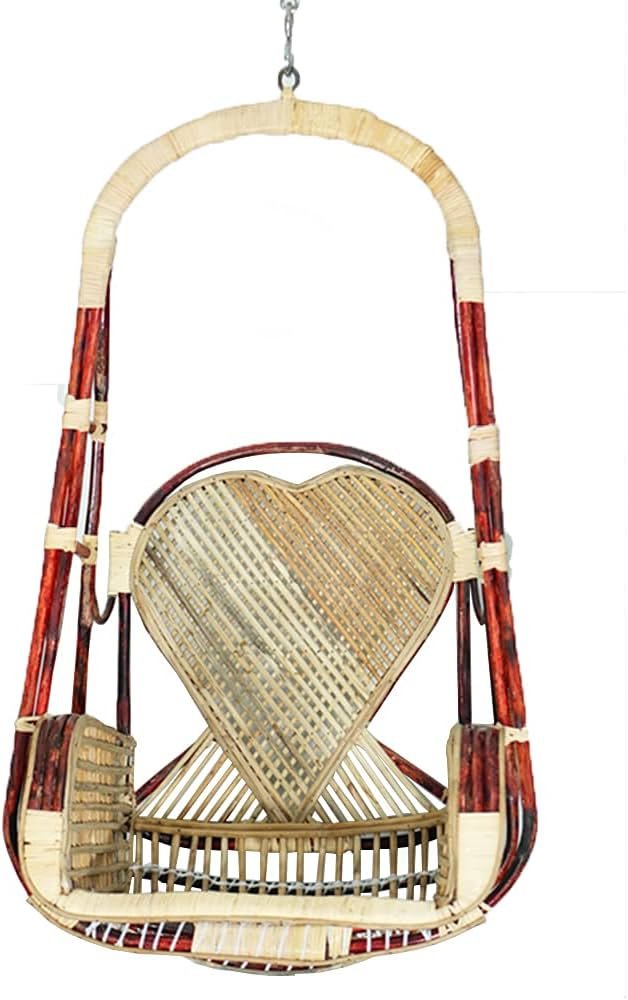
Walk into any showroom in Thaikkal, and you will be greeted by an astonishing variety of products. The most iconic piece is undoubtedly the Jhoola (traditional Indian swing). Ranging from simple single-seaters to massive, ornately woven three-seaters suspended by brass chains, the Thaikkal swing is a staple in many South Indian households, symbolizing relaxation and hospitality.
The artisans also produce elegant “Planter’s chairs” featuring extended armrests for resting one’s legs, a design relic from the colonial era. Beyond seating, the village manufactures complete dining sets, intricately woven room dividers, lightweight baby cradles, chic lampshades, and customized modern modular furniture that fits seamlessly into contemporary urban apartments.
Sustainable Luxury and Health Benefits
In an era increasingly dominated by mass-produced plastics, synthetic resins, and environmentally taxing metal furniture, Thaikkal rattan craft offers a breath of fresh air. Rattan is an inherently sustainable material. Unlike hardwood trees that can take decades to mature, rattan vines grow exceptionally fast—sometimes up to several centimeters a day—making them a highly renewable forest resource.
Furthermore, rattan furniture boasts significant ergonomic and health benefits. The natural fibers have excellent heat-absorbing and releasing properties. During the sweltering Indian summers, sitting on a tightly woven rattan chair provides a natural cooling effect, as the porous material allows for air circulation. Conversely, it retains a comforting warmth during the cooler monsoon months. The slight, natural flex of the woven seating also provides excellent lumbar and spinal support, which is why orthopedic doctors frequently recommend hard cane seating over overly soft synthetic cushions for maintaining proper posture.
The Shield of Authenticity: The GI Tag Milestone
For decades, the artisans of Thaikkal faced a silent threat: the influx of cheap, machine-made poly-rattan (plastic cane) and inferior quality products from unorganized sectors being passed off under the prestigious Thaikkal name. To protect the livelihood of these traditional craftsmen and to formally recognize the unique heritage of the region, the Government of India awarded the Thaikkal Rattan Craft the highly coveted Geographical Indication (GI) Tag (Registry No. 447) in the 2022-2023 cycle.
Much like the Kanchipuram Silk Saree or Darjeeling Tea, the GI tag is a powerful intellectual property right. It guarantees that any product sold under the “Thaikkal Rattan Craft” moniker has been manufactured within the specific geographical boundaries of the Anaikkaran Chathiram panchayat region, adhering to the strict, traditional, hand-crafted methods passed down through generations. This legal protection not only curbs counterfeiting but has also boosted the export value of the furniture, placing Thaikkal on the global map of premium heritage handicrafts.
Weathering the Storm: Modern Challenges and the Future
Despite the monumental achievement of the GI tag, the Thaikkal rattan industry is not without its modern-day hurdles. The primary challenge remains the erratic supply and skyrocketing costs of raw materials. Because rattan must be transported across thousands of kilometers from the Northeast or imported from abroad, fluctuating freight charges severely eat into the artisans’ profit margins.
Additionally, the craft demands immense physical labor and immense patience. In an age of rapid urbanization, many young people from the artisan families are migrating to larger cities in search of corporate jobs, creating a looming generational gap in the workforce. The physical toll of the craft—sitting for hours weaving, and working near open flames—makes it a hard sell for the newer generation.
However, there is a silver lining. With the rising global trend of eco-conscious consumerism and “bohemian” interior design, the demand for authentic, handcrafted, sustainable furniture is surging. Interior designers across metropolitan cities are actively seeking out Thaikkal artisans for bespoke, custom-made pieces.
The Thaikkal Rattan Craft is far more than an industry; it is a testament to the resilience of human creativity. It is the story of how a tiny village in Tamil Nadu adopted an Assamese vine and transformed it into a symbol of South Indian heritage. Every curve of a Thaikkal chair and every tight weave of a rattan basket carries the warmth of the artisan’s hands and the enduring legacy of a craft that has stood the test of time. In a world of fleeting trends and disposable commodities, investing in a piece of Thaikkal furniture is an investment in sustainability, art, and the preservation of a magnificent cultural history.