
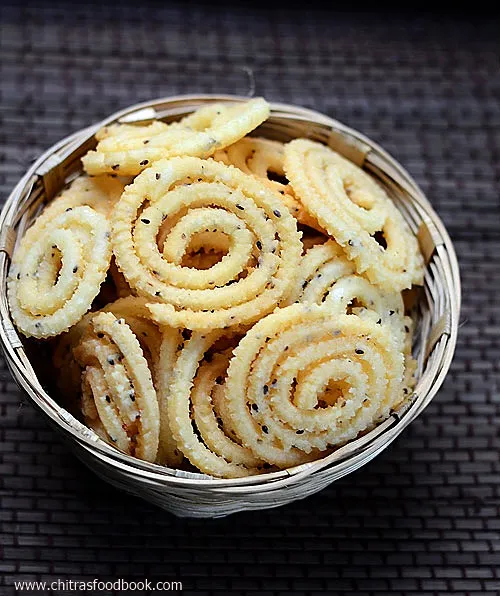
Manapparai Murukku
The Symphony of the Crunch: The Enduring Legacy of Manapparai Murukku
For millions of Indians, a train journey through the heart of Tamil Nadu is a deeply sensory experience. The rhythmic clatter of the iron tracks, the warm breeze carrying the scent of parched earth, and the vibrant chaos of the railway stations all blend into a nostalgic tapestry. Yet, if you are traveling on the stretch between Tiruchirappalli and Madurai, one specific sound dominates the platform as the train grinds to a halt: the energetic cries of vendors calling out, “Murukku! Manapparai Murukku! Hot Murukku!”
To the uninitiated, the word ‘murukku’ simply translates to ‘twisted’ in the Tamil language. A quick search on Wikipedia for “Manapparai Murukku” will give you a modest summary: it is a “super yummy and special kind of snack” originating from the town of Manapparai in the Tiruchirappalli district. However, to relegate this golden, spiraled delicacy to the mere category of a “biscuit” or “snack” is to do a profound disservice to its rich culinary heritage.
Behind every crunchy bite of a Manapparai Murukku lies a century-old history, an irreplaceable geographical secret, and the tireless hands of thousands of rural artisans. Recently crowned with a Geographical Indication (GI) tag, this humble cottage industry product has taken its rightful place among India’s elite heritage foods. Let us take a deep dive into the fascinating origins, the secretive baking techniques, and the artisanal craftsmanship behind South India’s most beloved travel companion.
The Genesis: From a Railway Canteen to a National Icon
The story of the Manapparai Murukku is inextricably linked to the Indian Railways. Its origins date back to the early 20th century, long before India gained independence. The town of Manapparai, strategically located on the highway connecting Trichy and Dindigul, was a bustling hub known primarily for its massive cattle market.
Local historical accounts and encyclopedic records trace the commercial birth of the snack to an enterprising local named Krishna Iyer (fondly remembered as Mani Iyer). Operating a modest refreshment stall at the Manapparai railway station, Iyer began selling homemade, deep-fried rice flour twists to hungry passengers. The snack was an instant hit. It was the ultimate travel food—it did not spoil easily, it was filling, and it offered a satisfying crunch that relieved the boredom of long journeys.
The legend of the snack reached its zenith when Mahatma Gandhi made a brief stop at the Manapparai Railway junction. According to local lore, the Mahatma tasted the murukku and was so delighted by its unique texture and flavor that he enthusiastically praised it to his companions.
The evolution of the snack took a pivotal turn around 1951 when immigrants from Usilambatti (a town near Madurai) settled in Manapparai and took over the trade. A pioneer among them, known as Meesaikarar alias Kasimayathevar, along with his family, infused the recipe with special techniques. They perfected the flavor profile—ensuring it was “neither too sweet nor too spicy,” but possessed a robust, savory depth that universally appealed to the Indian palate. It was this specific refinement that catapulted the local snack into the legendary “Manapparai Murukku.”
The Secret Alchemy: It Must Be in the Water
If you were to take the exact recipe, the finest ingredients, and the most skilled artisans from Manapparai and ask them to replicate the murukku in Chennai, Mumbai, or Delhi, the result would be fundamentally different. The secret to the snack’s unparalleled taste is not just culinary; it is entirely geological.
The town of Manapparai is blessed—or perhaps uniquely cursed, depending on who you ask—with groundwater that is naturally brackish and high in specific mineral content. This natural salinity is the soul of the Manapparai Murukku. When this local, mineral-rich water is mixed with the rice flour, it triggers a subtle chemical reaction with the starches. This naturally salty water imparts a distinctive, earthy flavor to the dough that absolutely cannot be artificially replicated by simply adding table salt to regular purified water.
Generations of local bakers will proudly tell you that their primary capital is not their equipment, but the water drawn from the deep borewells of their ancestral land.
The Anatomy of the Crunch: Ingredients and Preparation
Creating the perfect Manapparai Murukku requires a meticulous selection of ingredients and an intuitive understanding of proportions. It is an art form masquerading as cooking.
- The Grain Foundation: The base of the snack is high-quality raw rice. Traditionally, artisans prefer the Kallimadayan rice cultivated in the neighboring Dindigul district. The rice is washed, shade-dried, and milled into a fine powder.
- The Softening Agent: Unlike standard murukkus that might use a heavy ratio of lentils, the Manapparai variant uses only a tiny dash of urad dal (black gram) flour. The urad dal is dry-roasted to a golden brown before milling, adding a subtle nutty flavor and ensuring the dough remains pliable
- The Aromatics: A blend of cumin seeds (jeeragam), carom seeds (ajwain/omam), and black sesame seeds (gingelly) is added to the dry flour. These are often lightly crushed by hand to release their essential oils
- The Digestive Kick: A high-quality asafoetida (hing) solution is incorporated, which not only aids digestion but also acts as a natural preservative, giving the snack its long shelf life.
- The Fat: To achieve the microscopic air pockets that result in the iconic crunch, fresh, room-temperature butter or a ladle of smoking hot oil is rubbed into the dry flour before the water is added.
The dough is kneaded with the brackish Manapparai water until it reaches a stiff yet soft consistency. If it is too dry, the murukku will break while shaping; if it is too wet, it will absorb excess oil during frying.
The Masterstroke: The Double-Frying Technique
The defining culinary signature of the Manapparai Murukku—and the reason it maintains its crunch for weeks—is the rare and labor-intensive Double Frying Technique.
Most commercial snacks are extruded directly into a vat of boiling oil and fried once. The artisans of Manapparai take a much longer, more calculated route:
- The First Fry (Setting the Shape): The hand-twisted or pressed coils of dough are gently slid into a kadai (wok) filled with medium-hot oil (traditionally coconut or refined groundnut oil). They are fried just until they solidify and hold their intricate spiral shape. At this stage, they are pale, half-cooked, and relatively soft. They are then removed and set aside to rest and cool
- The Second Fry (The Crisping): Once a large batch of half-fried murukkus is ready, the temperature of the oil is increased. The rested coils are plunged back into the roaring heat. This sudden thermal shock expels all remaining moisture from deep within the dough.
This double-frying process ensures that the murukku cooks evenly from the inside out, achieving a spectacular, long-lasting crunch and a beautiful, pale golden-white hue without burning the delicate cumin and sesame seeds embedded in the dough.
The Hands Behind the Heritage
While massive food corporations rely on automated extrusion machines that churn out thousands of identical pieces a minute, the heart of the Manapparai industry remains in its traditional cottage setup. Today, between 400 and 500 families in the region depend entirely on this trade for their livelihood.
The industry is heavily driven by the phenomenal skill of local women. Long before the sun rises, these women gather in small, asbestos-roofed rooms or open courtyards to begin the day’s labor. The most premium version of this snack is the Kai Murukku (Hand-twisted Murukku). Without the use of any metal press or mold, these women take a pinch of dough and, with a mesmerizing flick of their thumbs and index fingers, twist and swirl it into perfect, pearly coils. A skilled artisan can shape a dozen pieces in less than ten seconds. It is a grueling, physically demanding ballet of the hands that pays for their children’s education and sustains the local micro-economy.
The Shield of Authenticity: The GI Tag
For decades, the fame of Manapparai proved to be a double-edged sword. As the snack’s popularity soared, bakeries and sweet shops across Tamil Nadu began mass-producing inferior, machine-made, single-fried biscuits and marketing them as “Original Manapparai Murukku.” These counterfeits, lacking the local water and the double-frying technique, severely damaged the reputation of the authentic product and undercut the traditional artisans.
Realizing that their heritage was being hijacked, the Manapparai Murukku Producers and Sellers Association launched a formidable legal battle. In 2010, they began the arduous process of applying for a Geographical Indication (GI) tag. They submitted extensive historical records, geographical data regarding their groundwater, and detailed documentation of their unique double-frying method to the Indian government.
After a grueling wait of over a decade, justice prevailed. In 2023, the Government of India officially awarded the Manapparai Murukku the GI Tag (Certificate No. 488).
This intellectual property right acts as a powerful legal shield. It guarantees that any product sold under the “Manapparai Murukku” name has been manufactured within the specific geographical boundaries of the town, using the local water and traditional methods. Recently, an official GI logo was also released, allowing consumers to easily identify the genuine product. This recognition has not only eliminated counterfeiters but has also opened doors for easy bank loans, government subsidies, and lucrative export opportunities to the Tamil diaspora in Southeast Asia, the Gulf, and the United States.
The story of the Manapparai Murukku is a masterclass in the preservation of Indian culinary heritage. It proves that in an era of hyper-processed, factory-made junk food, there is still an insatiable global appetite for authenticity, regional identity, and human craftsmanship.
From the dusty platforms of a rural railway station to the prestigious registry of India’s Geographical Indications, this humble, twisted dough has traveled a remarkable path. It is a testament to the magic that happens when the unique geology of a land meets the tireless dedication of its people.
The next time you snap a piece of a genuine Manapparai Murukku, listen closely to the crunch. You are not just hearing the sound of a well-fried snack; you are hearing the echoes of a century-old legacy.