
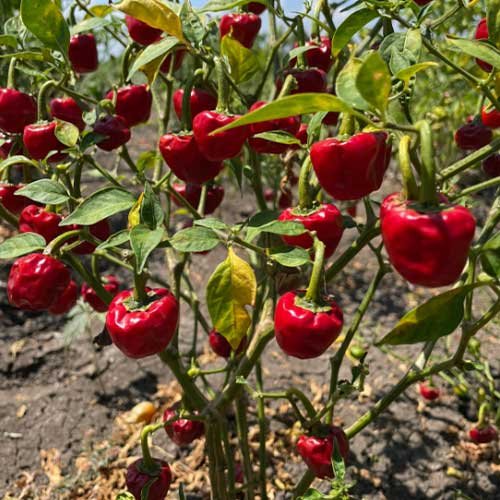
Ramanathapuram Mundu Chilli
The Ruby of the East: A Deep Dive into the Ramanathapuram Mundu Chilli
In the sun-drenched, salt-kissed landscapes of southern Tamil Nadu, a small, round fruit holds the power to transform a humble meal into a sensory masterpiece. Often referred to as “the ruby of the east” by spice traders, the Ramanathapuram Mundu Chilli is more than just a culinary ingredient; it is a historical relic, an agricultural marvel, and a symbol of regional pride.
While the world often looks to Guntur for its fiery spice, connoisseurs and traditional chefs turn their gaze toward the Ramanathapuram district. Here, in the parched, rain-fed taluks of Mudukulathur, Kadaladi, and Kamuthi, grows a chilli that defies the logic of geography—thriving in saline soils where little else survives.
A Historical Odyssey: From the New World to the Ramnad Estate
The story of the Mundu chilli is a fascinating chapter in the global history of the Columbian Exchange. Chillies are not native to India; they were brought to the subcontinent by the Portuguese in the late 15th and early 16th centuries. However, the Ramanathapuram Mundu is a unique evolution.
Over the last 200 years, this specific variety (Capsicum annuum) adapted to the peculiar micro-climate of the Ramnad region. During the British Raj, until 1947, the area was known as the “Kingdom of Ramnad” or the “Ramnad Estate.” It was during this period that the chilli gained its commercial identity. Local legends suggest that the seeds were carefully selected by generations of farmers, who realized that while long, thin chillies struggled in the saline, drought-prone coastal plains, a small, “fat” variety with thick skin could withstand the harsh environment.
The name “Mundu” itself reflects this physical evolution. In the Tamil language, Mundu translates to “fat and round” or “plump.” This descriptive name distinguishes it from the Samba variety (long and thin) also grown in the state.
The Science of Pungency: Salt, Wind, and the Scoville Scale
What makes the Ramanathapuram Mundu so special? The secret lies in its environment. The Ramanathapuram district is characterized by semi-arid conditions, low rainfall, and high soil salinity. For most crops, this is a death sentence. For the Mundu chilli, it is a catalyst for quality.
- Saline Tolerance: The chilli has evolved a thick, leathery pericarp (skin) that helps it retain moisture. This thickness is highly valued by food processors because it produces a higher yield of chilli powder per kilogram compared to thinner varieties.
- Milder Heat, Richer Aroma: On the Scoville Heat Scale, the Mundu chilli sits at a comfortable 17,500 to 30,000 SHU (Scoville Heat Units). While it provides a significant “kick,” it is not overwhelmingly spicy. Its true value lies in its high oil content and aroma. When roasted, it releases a deep, nutty fragrance that is a hallmark of South Indian “Tadka” (tempering).
- Natural Dye: The chilli is rich in capsanthin, a natural pigment. This gives dishes a vibrant, deep red color without the need for artificial dyes, making it a favorite for the export market, particularly in Europe and Japan
Agricultural Resilience: The Farmer’s Best Friend
For the farmers of Ramanathapuram, the Mundu chilli is often the only “cash crop” that provides a stable income. It is primarily a rain-fed crop, sown during the Tamil months of Aavani or Karthigai (August–November) to catch the retreating monsoon, and harvested during the dry heat of Chithirai (April–May).
The cultivation process is an exercise in traditional wisdom. Farmers often practice intercropping, planting cotton or coriander alongside the chillies. This not only maximizes land use but also helps in natural pest management. Perhaps the most remarkable aspect of Mundu cultivation is the preservation of seeds. Unlike commercial hybrid varieties that require farmers to buy new seeds every year, Mundu farmers have used “heirloom” seeds for centuries. They select the best fruits from their own harvest, dry them, and store the seeds for the next season—a practice that ensures the genetic integrity of the variety.
The GI Tag: Global Recognition for a Local Hero
In early 2023, the Ramanathapuram Mundu Chilli was officially granted the Geographical Indication (GI) Tag. This was a watershed moment for the region. A GI tag is more than just a label; it is a legal protection that ensures only chillies grown in this specific geographic area can be sold under the name “Ramanathapuram Mundu.”
This recognition has several implications:
- Protection from Counterfeits: It prevents low-quality, round chillies from other regions from being mislabeled as Ramnad Mundu.
- Boost to Exports: The GI tag acts as a certificate of quality for international buyers. In recent years, exports to countries like China, Thailand, and Italy have surged, with prices reaching up to ₹200–₹250 per kg—a significant increase that directly benefits the rural economy.
- Preservation of Heritage: It encourages the younger generation of farmers to continue the traditional cultivation methods rather than migrating to urban centers.
Culinary Significance: The Soul of South Indian Cooking
If you have ever tasted a traditional Chettinad curry or a classic Tamil Nadu Sambar and wondered why the flavor seemed so “rounded,” the answer is likely the Mundu chilli. Because it is milder than the Guntur varieties, chefs can use it in larger quantities to achieve a thick, rich consistency in gravies and chutneys without making the food inedible for those with a lower spice tolerance.
In the famous Karaikudi cuisine, the Mundu chilli is often sun-dried and then deep-fried as a side dish (called Mor Milagai when soaked in buttermilk) or used as the primary heat source in fish curries. Its thick skin allows it to hold up well during long cooking processes, slowly infusing the oil with its signature smoky flavor.
Interesting Facts & Trivia
- The “Stemless” Premium: Much of the international demand for Mundu chilli is for the “stemless” version. Farmers and laborers manually remove the stalks before drying, a labor-intensive process that ensures the final spice powder is pure and free of woody fibers.
- A “Chilli Zone”: The Tamil Nadu government has designated Ramanathapuram, along with Virudhunagar, Sivaganga, and Thoothukudi, as a “Chilli Zone” to promote integrated processing units and cold storage facilities.
- Medicinal Value: Local traditional medicine practitioners often suggest that the high capsaicin content in these native chillies aids in digestion and acts as a natural metabolism booster.
The Path Ahead: Challenges and Opportunities
Despite its success, the Mundu chilli faces challenges. Climate change has made the monsoons unpredictable, and the lack of modern irrigation in the parched Ramnad district remains a hurdle. However, with the GI tag and increasing global interest in “heritage foods” and “organic spices,” the future looks bright.
As consumers move away from mass-produced, bland ingredients and toward products with a story, the Ramanathapuram Mundu Chilli stands ready. It is a spice that carries the heat of the sun, the salt of the sea, and the resilience of a people who have turned a “parched land” into a global spice hub.
The next time you see a small, cherry-like dried red chilli in a gourmet store or a traditional market, take a moment to appreciate it. You aren’t just looking at a condiment; you are looking at 200 years of Tamil history, wrapped in a fiery, ruby-red skin.