
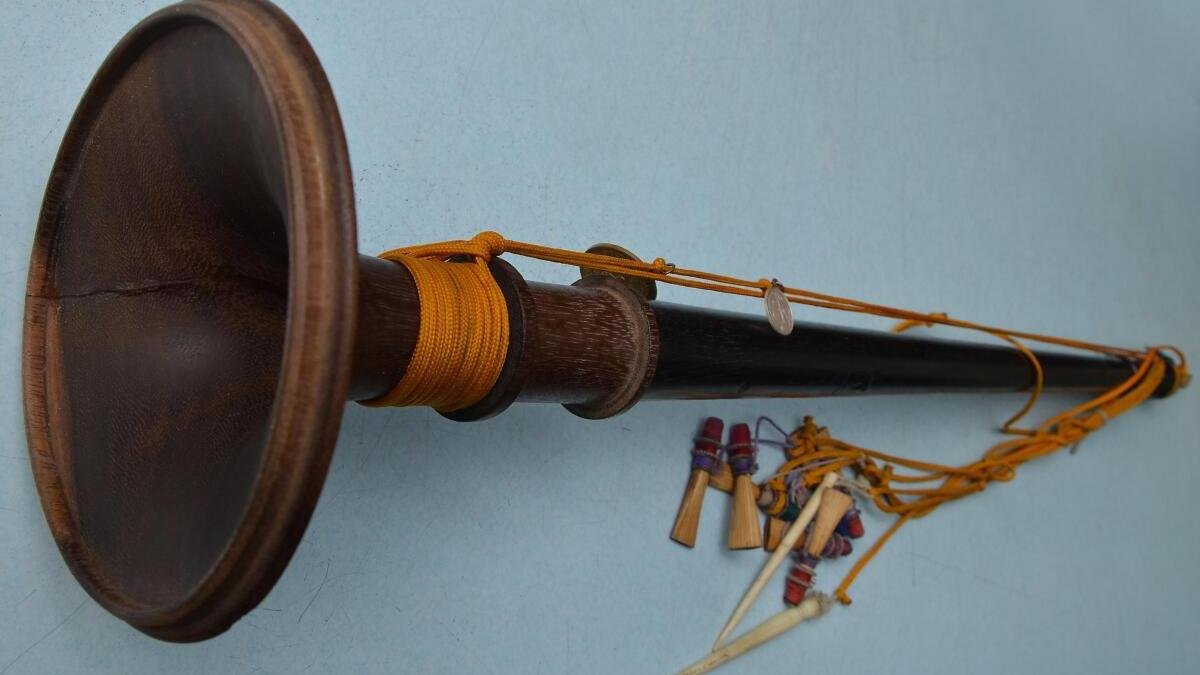
The Celestial Sound of the Cauvery: The Epic Story of the Narasinghapettai Nagaswaram
In the quiet, verdant village of Narasinghapettai, nestled near the temple town of Kumbakonam in Tamil Nadu, a century-old rhythm hums through the air. It isn’t just the sound of the nearby Cauvery river, but the rhythmic chiseling of wood—a process that transforms ancient timber into the Narasinghapettai Nagaswaram. Known as a Mangala Vadyam (auspicious instrument), this double-reed wind instrument is the soul of South Indian weddings, temple festivals, and classical Carnatic concerts. To hold a Narasinghapettai Nagaswaram is to hold a piece of history, crafted with a precision that borders on the divine.
The Genesis of a Masterpiece: Origins and History
The Nagaswaram itself has roots stretching back over 2,000 years, with mentions in ancient Sangam literature under names like Vangiyam or Ezhil. However, the specific legacy of Narasinghapettai began in the early 20th century. It was pioneered by master craftsmen like N.G.N. Ranganatha Achari, whose family inherited the skill of wood-turning from their forefathers.
The name “Nagaswaram” is a confluence of Naga (serpent) and Swaram (musical note), often associated with the belief that the instrument’s form was inspired by the serpent. In mythological lore, it is said that Lord Shiva gifted this instrument to a demon named Nagasuran, cementing its status as a bridge between the mortal and the celestial. In Narasinghapettai, this history isn’t just a story—it is a vocation that has sustained four generations of artisans.
The Alchemy of Aacha Wood
The defining characteristic of a Narasinghapettai Nagaswaram is the material from which it is carved. Unlike mass-produced instruments, these are primarily made from Aacha wood (Hardwickia binata), often referred to as Indian Blackwood.
Artisans don’t just use any Aacha wood; they seek out seasoned timber that is 75 to 100 years old. Frequently, this wood is salvaged from the pillars and lintels of ancient demolished houses. The reason is purely scientific: young wood contains moisture that can cause the instrument to warp or crack over time. Century-old wood, having survived the test of time, is “vibrationally stable,” providing the deep, resonant, and “fat” tone that professional artists crave. This wood is naturally water-resistant, a crucial feature for an instrument that must endure the constant moisture of a player’s breath.
The Anatomy of Sound: Construction and Design
A Nagaswaram is roughly 2.5 to 3 feet long and consists of three distinct parts:
- Kuzhal (The Pipe): The main cylindrical body, which features a conical bore. It typically has seven finger holes and five additional holes at the bottom used as controllers to adjust the tone.
- Anasu (The Bell): The flared bottom part, usually made from Vaagai (Rain Tree) or rosewood. This acts as a natural amplifier, projecting the sound across vast temple courtyards.
- Seevali (The Reed): The “heart” of the instrument, made from a local grass called Korukku Thatta (Naanal) found along the riverbanks.
The crafting process is entirely manual. Using traditional lathes (some still rope-operated) and iron files, the artisan hollows out the wood with microscopic accuracy. Tuning the instrument is the most delicate stage; a fraction of a millimeter in hole placement can render the instrument “un-musical.” This expertise is why legendary maestros like T.N. Rajarathnam Pillai and Sheik Chinna Moulana would travel specifically to this village to commission their instruments.
The “Pari” vs. “Thimiri” Evolution
In the early days, the Thimiri Nagaswaram—a shorter, high-pitched version—was the standard. However, during the mid-20th century, Narasinghapettai artisans played a pivotal role in popularizing the Pari Nagaswaram. Longer and with a lower, more majestic pitch, the Pari variety allows for a greater range of gamakas (oscillations), which are the essence of Carnatic music. This evolution allowed the Nagaswaram to transition from being a loud outdoor ritual instrument to a sophisticated concert centerpiece.
A Shield of Honor: The GI Tag Significance
In March 2022, the Narasinghapettai Nagaswaram was officially granted the Geographical Indication (GI) Tag. This was a landmark victory for the Thanjavur Musical Instruments Workers Co-operative Cottage Industrial Society.
- Authenticity: The tag ensures that only instruments made in this specific region using traditional methods can carry the name.
- Economic Support: It protects the few remaining families in the village from the influx of cheap, machine-made replicas from other states.
- Global Recognition: It has placed the tiny village of Narasinghapettai on the international map of “Heritage Crafts,” making it easier for artisans to export their work to the Tamil diaspora worldwide.
Interesting Historical Facts and Trivia
- Divine Symbolism: Every part of the Nagaswaram is traditionally associated with a deity. The bell represents Surya (Sun God), the body represents Brahma, and the seven holes represent the Seven Mothers (Sapta Matrika).
- Loudest Acoustic Instrument: It is recognized as one of the world’s loudest non-brass acoustic instruments, designed specifically to be heard above the din of temple crowds and fireworks.
- The “Cleaning” Needle: Every professional Nagaswaram comes with a small ivory or horn needle used specifically to clear the reed of debris, ensuring the airway remains pristine during long performances.
Preservation for the Future
Despite the prestige, the craft faces modern challenges. The supply of ancient Aacha wood is dwindling, and the labor-intensive nature of the work—which leaves a craftsman with a profit of only ₹1,500 per piece—makes it difficult to attract the younger generation. However, the GI tag has sparked a renewed interest. Modern artisans like N.R. Selvaraj are now experimenting with motorized lathes and CNC technology to assist the initial wood-cutting while keeping the final tuning and finishing strictly traditional.
The Narasinghapettai Nagaswaram is not just a tool for music; it is a repository of Tamil culture. As long as the bells of the Thanjavur temples ring and as long as the nadaswaram’s wail echoes through the marriage halls, the legacy of this village will remain etched in the wood and wind of South India.