
Pattamadai Mat
Woven from the Water: The Epic of the Pattamadai Mat
Nestled along the historic banks of the Tamirabarani River in the Tirunelveli district of Tamil Nadu lies the small town of Pattamadai. Despite its size, this community holds a prestigious distinction: it is the birthplace of the world-famous Pattamadai mats. More than just utilitarian objects, these mats are vibrant testaments to Tamil Nadu’s rich handicraft heritage, encapsulating the lifestyle, culture, and relentless hard work of the people who create them. The art of Pattamadai mat weaving stands as a vital pillar in the architectural marvel of Tamil craftsmanship, and its global reputation is intimately tied to the unique natural resources provided by the Tamirabarani River itself.
The river provides the essential nutrients required for the growth of a specific kora grass that serves as the raw material for these mats. Furthermore, the river’s water is crucial for the complex process of soaking the grass to achieve the necessary softness and flexibility needed for weaving. Base solely on this interplay between nature and human ingenuity, the Pattamadai mat emerges as a cultural artifact of profound significance.
The Weavers and the Reed
To truly grasp the history and culture surrounding this art form, one must understand the background of the artisans who have dedicated centuries to its mastery. The Pattamadai mats are handcrafted primarily by the Labbai Muslim community. Historical records indicate that this community migrated to Tamil Nadu from Andhra Pradesh approximately 200 years ago, during the Nawab rule. Upon their arrival, they initially engaged in dyeing colors and weaving coarse, rugged mats. This migration marked the beginning of a fascinating cultural blending, as a new handicraft tradition took root in Tamil soil.
Over time, a remarkable evolution occurred, transforming these utilitarian coarse mats into works of breathtaking artistry. The story of this transformation is preserved in a popular legend passed down through generations of weavers. According to this oral history, a weaver was deeply inspired by observing silk weavers creating intricate silk garments. He was seized by the ambition to apply the same sophisticated techniques to his own craft. He began experimenting with splitting the kora grass into extremely thin, almost microscopic strands. By treating these delicate reeds with the same care as silk threads and weaving them on complex looms, he succeeded in creating the first “Silk Mats” (pattu paai). Whether this legend is literal truth or a beautiful metaphor, it powerfully illustrates the innovation, creativity, and persistent spirit of the Pattamadai artisans.
The river remains central to this entire story. The unique quality and durability of the Pattamadai mat are directly attributed to the Tamirabarani. The ‘kora’ grass (specifically sedge grass or Cyperus corymbosus) that serves as the raw material thrives on the riverbanks, drawing strength and unique properties from the water’s nutrient blend. The river water itself is utilized in the critical soaking phase, which softens the reeds and enhances their elasticity. This fusion of irreplaceable natural resources and tireless human labor is what endows the Pattamadai mat with its peerless quality.
The Labor of Patience
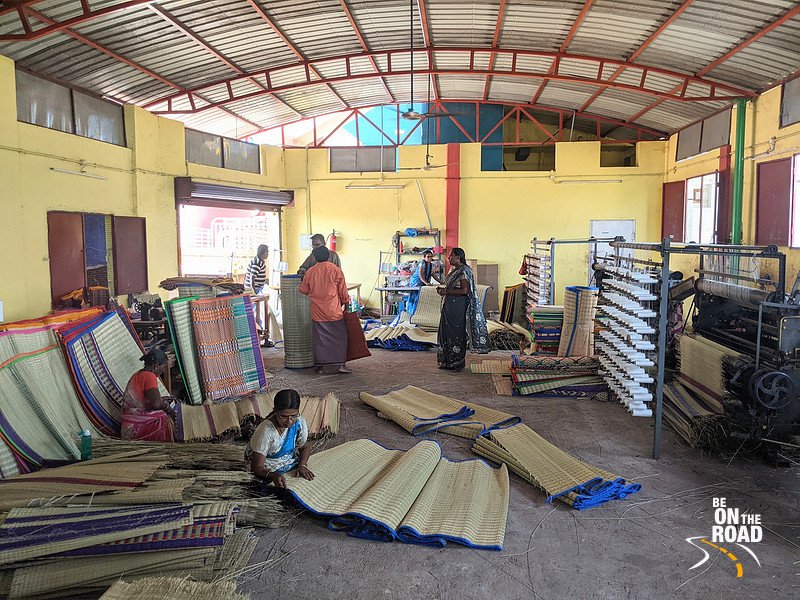
The creation of a fine Pattamadai mat is a profoundly labor-intensive process, demanding immense patience and skill from start to finish. The process begins with harvesting the kora grass, which is immediately taken to the Tamirabarani River for soaking. Following this, the soaked reeds are meticulously split into incredibly thin strands—an exceptionally delicate operation requiring a steady hand and sharp eye. These fine strands are then prepared for weaving on intricate traditional looms, utilizing either cotton or silk weft threads to create a glossy, durable finish.
The commitment to tradition extends to the coloring process, where natural dyes are exclusively used. Sappan wood, Indigo (avuri), and Turmeric (manjal) are among the ingredients employed to create rich, lasting colors. This dedication to natural materials ensures that the vibrant hues of the Pattamadai mat remain beautiful for decades, resisting the fading that often afflicts synthetic alternatives.
While Pattamadai produces a range of mats, including coarse and medium varieties, it is the incredibly fine “Silk Mats” that have garnered the most fame. These pinnacle achievements are distinguished by their extraordinary softness and a glossy, almost reflective sheen akin to actual silk. Beyond their visual and tactile appeal, Pattamadai mats possess unique practical properties; they have a distinct cooling effect, making them ideal for comfortable sleeping during scorching summer months. This natural property also makes them highly suitable for meditation and prolonged sitting. For the local Muslim community, these finely woven mats serve a sacred purpose as dedicated prayer mats.
The Knot of Union: Cultural Signposts
The Pattamadai mat is deeply intertwined with the cultural life of South India, holding a particularly revered spot in traditional customs. In South Indian weddings, the mat is a non-negotiable component of the ‘Seer Varisai’—the essential dowry and gifts provided to the newly married couple. Crucially, these wedding mats are often personalized, with the names of the bride and groom and the date of the ceremony intricately woven directly into the fabric. This personalization transforms the mat into a lifelong keepsake, and presenting such a mat is considered a mark of the highest respect and honor for the union. In Tamil Nadu’s vibrant culture of hospitality, gifting a Pattamadai mat to valued guests is a widely recognized gesture of honor, integrating the mat into the very fabric of social relations. Globally, it has been recognized as a profound symbol of Tamil cultural heritage.
This high esteem is not merely localized; the Pattamadai mat has historically received significant recognition on the world stage. These exceptional handicrafts have been presented to British royalty, with both Queen Victoria and Queen Elizabeth II receiving them as gifts, highlighting their status as treasures of international value. Further cementing its unique standing, the Pattamadai mat was officially granted a Geographical Indication (GI Tag) in 2013, an honor recognizing its distinct craftsmanship and unique regional origin. This tag is a major milestone, serving as a formal validation of the mat’s quality and its centuries-old historical narrative.
A Heritage at Risk
Despite this rich history and global renown, the ancient art of Pattamadai mat weaving is today facing significant modern challenges. The primary threat comes from the influx of cheap, mass-produced plastic mats, which are increasingly replacing the traditional, handcrafted versions in daily use. Compounding this problem is the difficulty in attracting the next generation of artisans; the years of training and the intensive, patience-demanding labor required are often seen as less appealing than modern career paths. Furthermore, shortages of the critical kora grass are becoming more common, threatening the viability of the entire process. Confronting these modern pressures and actively protecting this endangered craft is absolutely vital. Doing so is essential not just for the economic livelihoods of the artisans but for the preservation of Tamil Nadu’s priceless cultural heritage.
Ultimately, the Pattamadai mat is far more than an item of furniture; it is a sacred cultural artifact, an emblem of lifestyle, and a symbol of persistent human effort. Born from the waters of the Tamirabarani, this unique art form stands as a bright beacon of Tamil handicraft heritage on the global stage. The mat is a living record of the Labbai Muslim community’s history, their migration, their innovative spirit, and their profound bond with the natural environment. It serves practical needs from cooling sleep to sacred prayer and stands as a vital cultural signpost at every significant life juncture, particularly the sacred knot of marriage. It is an indispensable treasure of Tamil culture, and its preservation is a sacred duty shared by all who value heritage. Base on every sentence of this deep dive into its history, Pattamadai mat weaving is not just a trade; it is a living symbol of Tamil pride, creativity, and resilience.