
Nilgiri Tea
High above the sweltering plains of South India, where the Western Ghats collide with the Eastern Ghats in a celestial knot of granite and greenery, lies the “Blue Mountains”—the Nilgiris. Here, the air is thin, the mist is a permanent resident, and the rolling hills are draped in a carpet of emerald velvet. This is the home of Nilgiri Tea, a beverage that carries the fragrance of mountain flowers and the weight of colonial history. To sip a cup of Nilgiri tea is to partake in a legacy that spans two centuries, involving intrepid explorers, Chinese botanical secrets, and the tireless labor of generations.
The Pioneer’s Dream: John Sullivan and the Discovery of the Hills
The story of Nilgiri tea does not begin with a plant, but with a person. In 1819, John Sullivan, the then Collector of Coimbatore, ventured into the rugged highlands inhabited by the indigenous Toda and Badaga tribes. He found a climate so reminiscent of the English countryside that he dubbed it “the Switzerland of the East.” While Sullivan initially focused on building the town of Ootacamund (Ooty) and planting European vegetables, he inadvertently set the stage for one of the world’s most significant tea hubs.
In the early 1830s, the British East India Company was desperate to break the Chinese monopoly on tea. Dr. Christie, an assistant surgeon, made the first experimental planting of tea in the Nilgiris in 1832. Though he passed away shortly after, his small patch of tea bushes near Coonoor proved that the Nilgiri soil was not just suitable—it was exceptional. By 1835, seeds from the Assam variety and smuggled Chinese Camellia sinensis seeds were distributed across the hills, marking the official birth of the Nilgiri tea industry.
The Chinese Connection and the Rise of the Estates
A fascinating and often overlooked chapter of Nilgiri history involves the arrival of Chinese prisoners of war. Following the Opium Wars in the mid-19th century, Chinese convicts were sent to the Nilgiris to work on the burgeoning plantations. These individuals brought with them centuries of ancestral knowledge regarding tea cultivation and processing. They helped refine the “Orthodox” method of tea production—a technique that focuses on preserving the whole leaf and its complex essential oils.
By the 1860s, the landscape began to change drastically. As coffee plantations in the region were decimated by “coffee rust” (a fungal disease), desperate planters turned to tea as their salvation. Large estates like Thiashola, Kattary, and Dunsandle began to dominate the horizons. These estates weren’t just farms; they were self-contained ecosystems with their own schools, hospitals, and social hierarchies, mirroring the Victorian structures of the British Empire.
The Magic of Terroir: Why the Nilgiris are Unique
What makes Nilgiri tea stand out in a global market dominated by Assam’s strength and Darjeeling’s delicacy? The answer lies in the Terroir—the specific environmental factors that shape the plant’s character. Unlike North Indian tea regions that have distinct harvesting seasons, the Nilgiris are blessed with two monsoons. This allows for tea to be harvested year-round, earned the region the nickname “The Fragrant One.”
The high altitude—ranging from 1,000 to 2,500 meters—ensures that the tea leaves grow slowly, concentrating their flavors. The most prized of all is the “Frost Tea.” Harvested in the biting cold of January and February, when the morning frost coats the leaves, this tea undergoes a unique chemical change. It produces a brew that is pale, highly aromatic, and carries notes of sweet cream and citrus. It is often described as the “white wine of teas.”
The Labor of Love: The Human Spirit Behind the Leaf
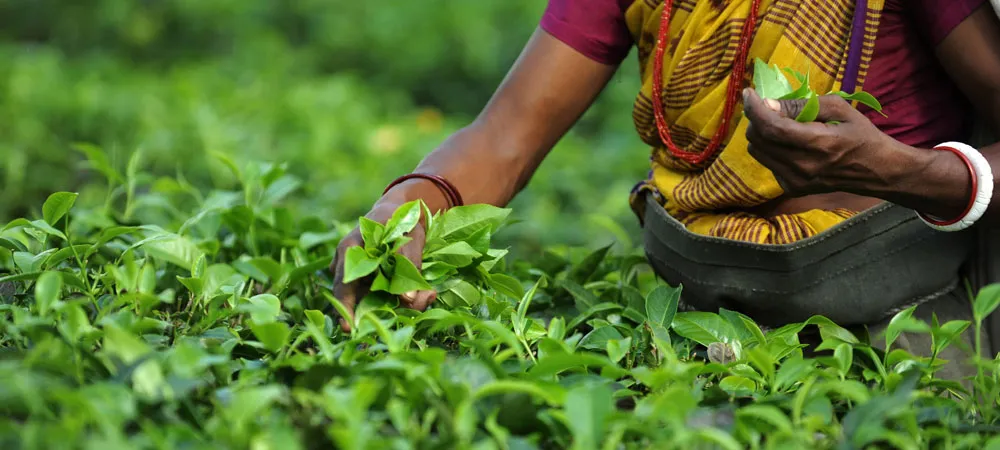
The breathtaking beauty of the tea gardens often masks the grueling reality of its creation. The history of Nilgiri tea is inextricably linked to the migration of thousands of workers from the plains of Tamil Nadu and the repatriated Sri Lankan Tamils in the 1960s. These workers, predominantly women, are the backbone of the industry. Their skilled hands pluck “two leaves and a bud” with a precision that no machine has ever truly replicated.
The Nilgiris also stand apart because of the Small Growers’ Movement. While Assam is dominated by massive corporate holdings, the Nilgiris boast over 60,000 small-scale farmers. This democratic distribution of land has led to a unique cooperative model. The INDCOSERVE (The Tamil Nadu Small Tea Growers’ Industrial Co-operative Tea Factories Federation) is the largest of its kind in India, ensuring that the wealth generated by the “Blue Mountain Brew” supports the local community directly.
From Bush to Cup: The Art of the Orthodox Method
In the dark, cool interiors of century-old factories, the transformation of green leaves into black gold takes place. Most premium Nilgiri tea is processed using the Orthodox Method, which involves four distinct stages: Withering, Rolling, Fermentation (Oxidation), and Drying.
Withering: The leaves are spread out to lose moisture and become pliable.
Rolling: The leaves are twisted to break the cells and release enzymes.
Oxidation: This is where the magic happens. The green leaves turn a deep copper, developing the characteristic Nilgiri “floral” aroma.
Firing: The leaves are dried to stop oxidation and lock in the flavor.
Unlike the CTC (Crush, Tear, Curl) method used for strong breakfast teas, the Orthodox method treats the leaf with reverence, resulting in a cup that is bright, brisk, and exceptionally clean on the palate.
The Modern Renaissance and the Global Stage
For decades, Nilgiri tea was unfairly labeled as a “blender’s tea”—used primarily to add color and brightness to mass-market tea bags. However, the 21st century has seen a magnificent renaissance. In 2008, Nilgiri Tea was granted the Geographical Indication (GI) status, legally protecting its name and origin.
Today, Nilgiri specialty teas—including Green Tea, White Tea, and Hand-Rolled Oolongs—are winning gold medals at international tea auctions in Las Vegas and Dubai. Connoisseurs are finally recognizing what the British pioneers knew 150 years ago: that the high-grown Nilgiri leaf offers a balance of strength and aroma that is virtually unmatched.
A Sustainable Future for the Blue Mountains
As we look toward the future in 2026, the Nilgiri tea industry is at a crossroads. Climate change and rising temperatures threaten the delicate “Frost Teas.” In response, the region is leading the way in Organic and Rainforest Alliance certifications. Many estates are reverting to forest-friendly farming, reducing chemical inputs to protect the fragile Western Ghats biodiversity, including the endangered Nilgiri Tahr.
The story of Nilgiri tea is one of resilience. It is a story that began with a few smuggled seeds and grew into a global phenomenon. It is a testament to the fact that the finest things in life are often found in the most difficult places—on the steep, misty slopes where the soil is rich and the air is clear.
Nilgiri Tea History, Blue Mountain Tea, Nilgiri Frost Tea, South Indian Tea Estates, John Sullivan Ooty.
History of tea cultivation in Nilgiris, medicinal benefits of Nilgiri green tea, Nilgiri tea GI tag significance, small tea growers cooperative Tamil Nadu, Orthodox vs CTC tea in Nilgiris.
#NilgiriTea #BlueMountains #TeaHistory #OotyDiaries #IndianTea #SustainableFarming #TeaSommelier #WesternGhats #TamilNaduTourism #OrthodoxTea