
East India Leather
The Birth of a Legend: From Madras to the World
The year was 1856. While the world was shifting toward industrialization, the British Raj sought a material durable enough to outfit the most powerful military force of the era: the British Army. They found their answer in the traditional vegetable-tanning techniques practiced by the skilled artisans of the Madras Presidency—specifically in the regions of Trichy and Dindigul.
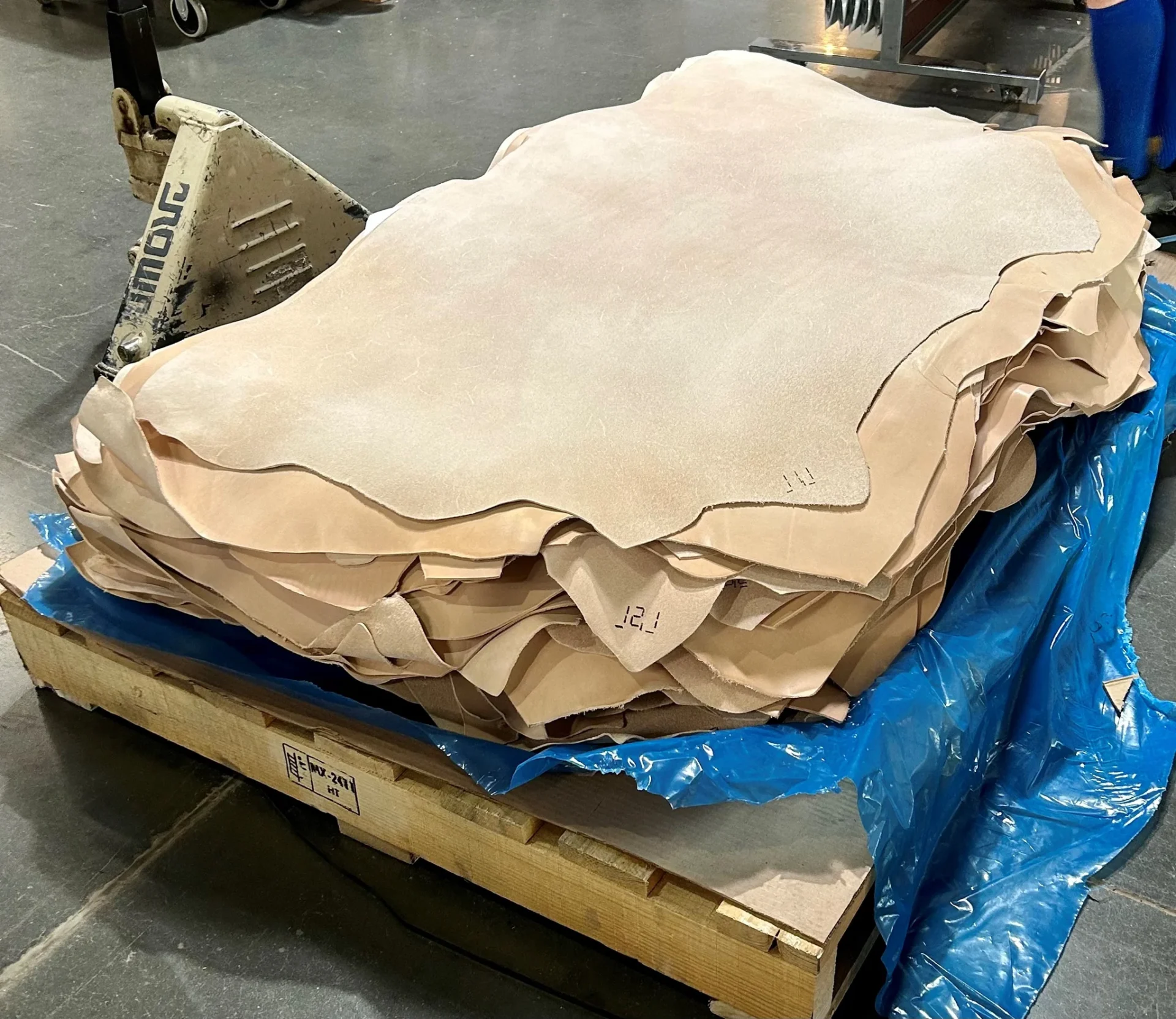
The name “East India Leather” was not merely a brand; it was a classification. It referred to semi-finished, vegetable-tanned hides and skins exported by the East India Company. These “Madras Skins” became the backbone of European leathercraft. However, early versions had a flaw: the leather, tanned with local Avaram bark, would oxidize and turn a patchy red when exposed to sunlight.
In a pivotal moment in 1847, Charles De Sousa, a French-Eurasian technologist, introduced a “Myrobalan bath.” By treating the leather with an extract from the Myrobalan seed and Wattle bark, he stabilized the color and texture. The result was a beautiful, blonde, cream-colored leather that didn’t just cover the fibers—it “fed” them. This innovation sparked a surge in exports to the United Kingdom and Germany, marking the dawn of E.I. Leather as a global commodity.
The Alchemy of the Myrobalan Bath
What makes E.I. Leather the “Champagne of Leathers”? The secret lies in the tanning process, a slow-motion alchemy that defies modern chemical shortcuts. Unlike 90% of the world’s leather, which is “Chrome Tanned” using heavy metals in a matter of hours, E.I. Leather is strictly vegetable-tanned.
The process is an organic dance. Hides are soaked in pits filled with tannins derived from tree barks and seeds. This doesn’t just preserve the skin; it enhances its molecular structure, giving it a “lively bounce” and a natural glow. The resulting leather is exceptionally strong yet soft to the touch. It is also eco-friendly, a characteristic that has seen a massive resurgence in demand as the 21st-century fashion world turns its back on toxic chemical processing.
A Geographical Treasure: The GI Tag
In 2008, E.I. Leather received its crowning achievement: the Geographical Indication (GI) tag. Much like Champagne must come from France or Basmati from the foothills of the Himalayas, true E.I. Leather can only be produced in specific clusters of Tamil Nadu. This legal protection ensures that the traditional knowledge passed down through generations of the deavangar and Muslim tanning communities remains protected from mass-produced imitations.
Today, the industry is centered in the Palar River valley, stretching from Erode in the west to the outskirts of Chennai. This region accounts for nearly 50% of India’s leather production. When you hold a luxury leather bag from a high-end brand today, there is a high probability that the raw material began its journey in a quiet tannery in Dindigul or Ambur.
The Resilience of a Craft: Facing Modern Storms
History has not always been kind to the tanners of Tamil Nadu. The industry faced a massive “tariff shock” in late 2025, with steep duties from the United States threatening export volumes. Yet, the spirit of the craft remains unbroken. Organizations like the Central Leather Research Institute (CLRI) in Chennai and brands like Hidesign have championed the restoration of the E.I. technique, proving that heritage can coexist with modern sustainability.
The E.I. Leather story is one of survival. It survived the fall of the East India Company, the transition from the Raj to Independent India, and the environmental challenges of the late 20th century. It persists because it offers something a machine cannot replicate: a patina that grows more beautiful with age and a history you can feel in the grain.
Interesting Historical Facts
The British Army’s Choice: By the late 19th century, E.I. Leather was the standard material for British military boots and saddles due to its superior tensile strength.
The “Blonde” Glow: It is the only leather known to have a natural “glow” that shines through any hand-rubbed color applied to it.
A Family Affair: The skill of tanning E.I. hides is often a hereditary craft, with specific “secret” ratios of bark and seed extracts kept within families for centuries.
Eco-Pioneer: Long before “sustainability” was a buzzword, E.I. Leather was being produced using 100% biodegradable plant extracts.
More Than Just a Hide
E.I. Leather is a testament to the fact that some things are done best when they are done slowly. In an age of fast fashion, it stands as a sentinel of quality—a bridge between the Madras of 1856 and the global runways of 2026. Whether it is the soft interior of a luxury car or the sturdy strap of a heritage watch, the legacy of the East India Company’s greatest discovery continues to wrap the world in excellence.
East India Leather, E.I. Leather History, Vegetable Tanned Leather India, Tamil Nadu Leather Industry, Madras Skins History, GI Tag Leather India, Sustainable Leather Tanning, Dindigul Tanneries, Ambur Leather Export.
History of East India Leather in Madras Presidency, How E.I. Leather received GI tag, Differences between Chrome tanning and E.I. tanning, Traditional vegetable tanning process in South India, Impact of British Raj on Indian leather industry.
#EILeather #EastIndiaLeather #HeritageCraft #SustainableFashion #MadeInIndia #TamilNaduHeritage #LeatherHistory #VegetableTanned #SlowFashion #MadrasPresidency