
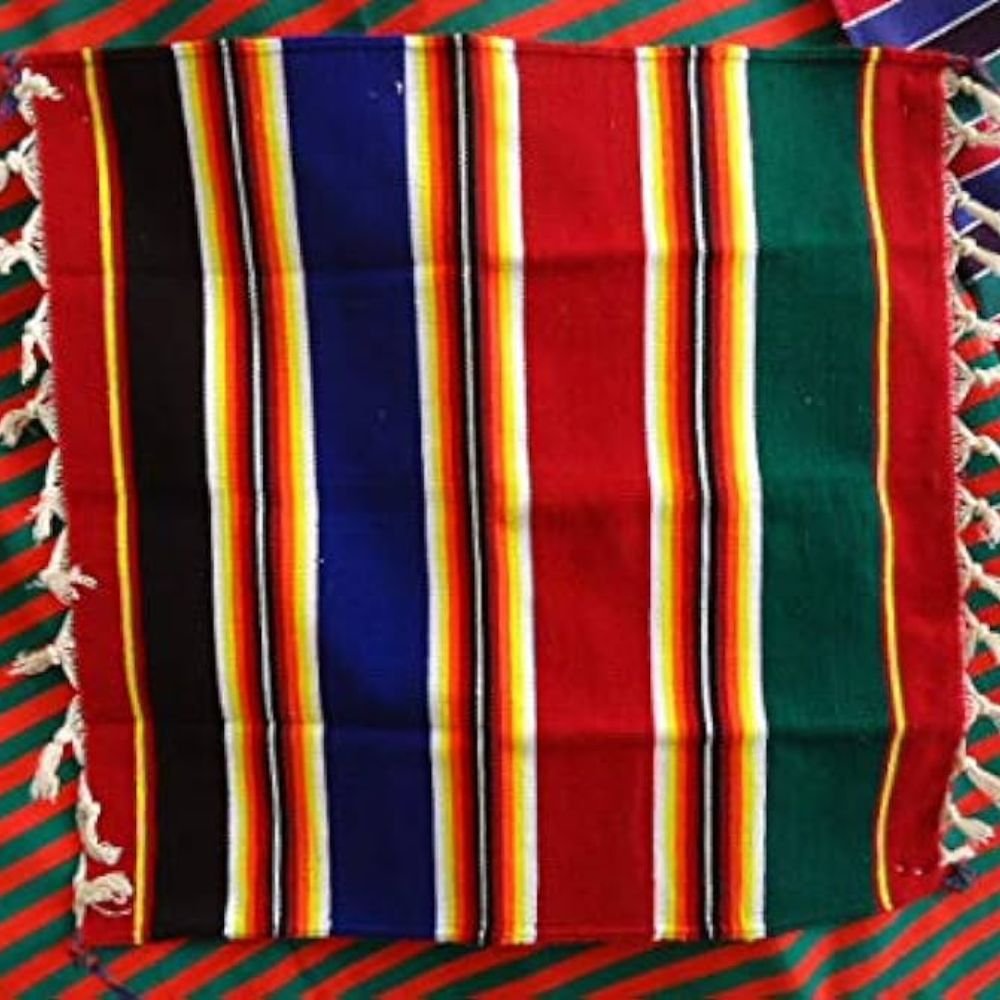
The Warp and Weft of Bhavani: The Legend of the Jamakkalam
In the confluence of the sacred rivers Cauvery and Bhavani, in the Erode district of Tamil Nadu, lies a town that has hummed with the rhythmic clatter of handlooms for over two centuries. This is Bhavani, often hailed as the “Carpet City” of South India. But to call its most famous creation a mere carpet would be a disservice to history. This is the story of the Bhavani Jamakkalam—a vibrantly striped, ruggedly durable textile that has served as the humble floor mat for village councils, the ceremonial bedspread for weddings, and a symbol of artisan resilience that earned its Geographical Indication (GI) tag in 2005.
The Birth of a Textile Identity: A 19th-Century Genesis
The story of the Jamakkalam begins not in a factory, but in the migratory patterns of the Jangamars, a community of traditional weavers who settled in Bhavani during the early 19th century. Historically, these weavers were masters of cotton textiles, but they faced a changing economic landscape as British industrial imports began to flood Indian markets. To survive, the weavers of Bhavani had to innovate. They pivoted from fine clothing to a heavy-duty, multi-colored floor spread that utilized a unique “double-clothed” weaving technique.
By the mid-1800s, the Bhavani Jamakkalam had carved out a niche for itself. Unlike the plush, knotted carpets of the North influenced by Persian aesthetics, the Jamakkalam was distinctly Dravidian. It was utilitarian, bold, and incredibly tough. It was designed to withstand the rigors of Indian rural life—rolled up and carried to temple festivals, spread out under banyan trees for community disputes, or used as a sturdy wrap for goods during travel.
The Architecture of the Loom: Threads and Techniques
What makes a Jamakkalam a “Bhavani” original? The secret lies in the warp and the weft. Traditionally, these carpets are woven using coarse cotton threads. The distinctive feature is the “warp-faced” weaving, where the longitudinal threads are packed so tightly that they completely hide the horizontal weft threads. This creates a ribbed texture and a thickness that makes the mat nearly indestructible.
The hallmark of a Jamakkalam is its vibrant stripes. In the early days, artisans used natural dyes—indigo for blues, madder root for reds, and turmeric for yellows. The color palette was a reflection of the South Indian landscape: the deep red of the earth, the bright yellow of the sun, and the forest green of the Western Ghats. Today, while synthetic dyes offer a wider spectrum, the traditional striped patterns remain the most sought-after design, often featuring intricate borders known as Kanni or Vaira (diamond) patterns.
A Carpet for the Common Man: Social Significance
In the social hierarchy of Indian textiles, the Jamakkalam has always been the “People’s Carpet.” While the silk weavers of Kanchipuram dressed the royalty, the weavers of Bhavani served the masses. The Jamakkalam became an essential part of the South Indian “Seer” (dowry or ceremonial gift). No wedding was considered complete without a set of Bhavani mats gifted to the newlyweds.
Its presence in public life was equally profound. In the Panchayats (village councils), the Jamakkalam served as a neutral ground where elders sat to deliver justice. In schools before the era of modern desks, generations of Indian children learned their alphabets sitting cross-legged on these mats. This ubiquity turned the Bhavani Jamakkalam into more than just a product; it became a thread in the social fabric of Tamil Nadu.
The Crisis of the Power Loom: A Battle for Authenticity
The late 20th century brought a formidable foe to the doorstep of Bhavani: the power loom. Automated machines could produce “Jamakkalam-style” mats at a fraction of the cost and time. This led to a dilution of quality and a threat to the livelihoods of thousands of handloom weavers. The hand-woven Jamakkalam, which takes two weavers working in tandem on a pit loom several days to complete, could not compete on price alone.
However, the handloom version possesses a “soul” and a structural integrity that power looms cannot replicate. The hand-beating of the weft ensures a density that makes the carpet stay flat on the floor without curling at the edges—a common flaw in machine-made versions. To protect this heritage, the weaver cooperatives of Bhavani fought for and won the Geographical Indication (GI) status in 2005. This legal protection ensures that only carpets woven in the defined geographical area of Bhavani using traditional methods can carry the name.
Beyond Floors: The Evolution into Fashion and Home Decor
The modern era has forced the Bhavani Jamakkalam to evolve once again. In the 21st century, these weavers are no longer just making floor mats. Recognizing the global shift toward sustainable, ethnic home decor, the artisans have diversified. Today, the “Bhavani Style” can be found in laptop bags, table runners, cushion covers, and even trendy waistcoats.
Designers from Chennai to New York have taken note of the Jamakkalam’s bold geometry. Its rugged cotton texture is being repurposed for contemporary upholstery, blending the rustic charm of Erode with high-end interior design. This diversification has provided a vital lifeline to the younger generation of weavers, who are finding ways to merge their ancestral skills with modern market demands.
The Living Heritage: Visiting the Weaving Clusters
Walking through the streets of Bhavani today is a sensory experience. The air is thick with the scent of dyed cotton and the rhythmic “thwack-thwack” of the wooden reed hitting the cloth. Most weaving units are family-run enterprises, where the pit loom is located in the front room of the house. It is a collaborative effort: the men usually handle the heavy lifting of the loom, while the women specialize in the intricate task of preparing the bobbins and finishing the fringes.
Despite the challenges of rising raw material costs and competition from synthetic floorings, the spirit of Bhavani remains unbroken. The Jamakkalam is a survivor. It has survived colonial transitions, the industrial revolution, and the digital age. It remains a testament to the fact that some things—like the comfort of a hand-woven cotton mat on a warm afternoon—cannot be improved by technology.
Conclusion: An Enduring Legacy
The Bhavani Jamakkalam is a symbol of the “Make in India” spirit long before the slogan existed. It is a product born of necessity, refined by artistry, and preserved by law. As we look to a future where sustainability is paramount, the 100% biodegradable, hand-woven cotton carpet of Bhavani stands as a gold standard. It is more than just a floor covering; it is a canvas of South Indian history, woven one thread at a time.
Bhavani Jamakkalam History, Bhavani Carpet City, GI Tagged Textiles Tamil Nadu, Handloom Weaving Bhavani, Erode Weaving Clusters.
Long-tail Keywords: Traditional cotton floor mats of South India, history of Jangamar weavers in Bhavani, difference between handloom and power loom Jamakkalam, Bhavani Jamakkalam home decor trends 2026, medicinal and cooling properties of cotton mats.
Hashtags: #BhavaniJamakkalam #HandloomIndia #TamilNaduHeritage #SustainableDecor #GIRegistered #VocalForLocal #TextileHistory #IndianWeavers #ErodeDiaries #EthicHome