
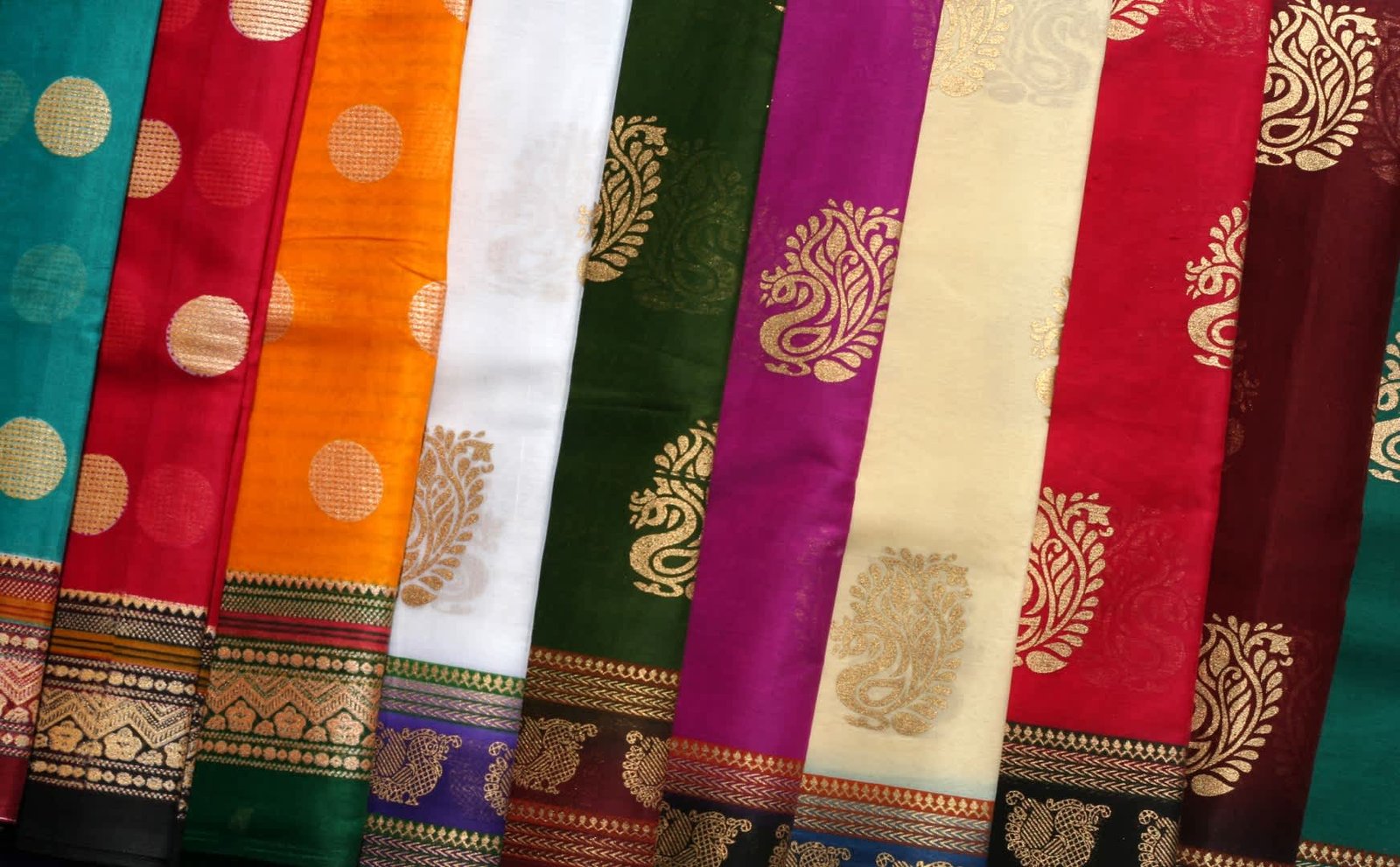
Salem fabric
The story of Salem’s textile prowess begins not with machines, but with the very earth itself. The name “Salem” is believed by many historians to be a corruption of Shailam, meaning a place surrounded by mountains. These mountains provided more than just a scenic backdrop; they offered a unique climate and mineral-rich water sources like the Thirumanimutharu River, which proved essential for the early stages of textile processing.
Archaeological evidence and Sangam literature suggest that weaving in the Salem region is one of India’s most ancient cottage industries. Long before the term “industrial hub” existed, Salem was a primary handloom center where the Salyar and Devangar communities turned raw cotton into “white gold.” These early artisans didn’t just make clothes; they created a social fabric, with every large town and village in the district housing families whose hands were perpetually stained with indigo or the pale cream of unbleached cotton.
The Royal Patronage: From Vijayanagara to the Nayakars
The true “Golden Age” of Salem textiles arrived during the expansion of the Vijayanagara Empire in the 15th century. As the empire moved south, it brought with it a wave of cultural and technological exchange. Artisans from across the Deccan plateau migrated to Salem, bringing sophisticated weaving techniques. It was during this era that the legendary Salem Venpattu (White Silk) began to take its royal form.
The Nayakar kings, who followed the Vijayanagar rule, were passionate patrons of the arts. They recognized that the water in Salem possessed a unique alkaline quality that acted as a natural catalyst. When raw silk was washed in these local waters, it achieved a level of brilliance and pristine whiteness that no chemical bleach in the world could replicate. This “mystical” luster made Salem silk the preferred attire for the gods in temples and the nobility in palaces.
The Colonial Era: Robert Clive and the Global Reach
By the 18th century, the fame of Salem’s “Long Cloth” (high-quality white cotton) had reached the ears of the British East India Company. In a fascinating historical twist, Salem became a strategic “Commercial Residency” for the British. Robert Clive, the man who laid the foundations of British power in India, was intimately connected to the region’s trade.
The British were so impressed by the durability and fine texture of Salem cotton—often called “Madras Cloth” in European markets—that they established massive procurement centers. Ships from the Coromandel Coast carried Salem-woven muslins and calicos to the boutiques of London and the wharfs of the Americas. For a time, the fashion of the Western world was being dictated by the handlooms of a small South Indian district.
The Alchemy of Venpattu: The King of Silks
While Salem produces a vast array of textiles, the Salem Venpattu remains its crown jewel. Granted the Geographical Indication (GI) Tag in 2008, Venpattu is a marvel of technical excellence. Unlike the colorful silks of Kanchipuram, Venpattu focuses on the purity of white.
The process is grueling. A single dhoti can take a weaver two to three days to complete. The magic lies in the “Lattice Dobby” mechanism, which allows for the creation of intricate motifs like the Nagachattai (cobra skin) or Muthu (pearl) patterns on the borders. One of the most interesting facts about true Salem Venpattu is that it “lives”—after washing, the initial stark white gradually matures into a soft sandal or deep yellow hue, returning to the natural state of the silk yarn, a sign of its absolute organic purity.
Elampillai: The Modern Renaissance
As we moved into the late 20th century, the industry faced a crossroads. While traditional handlooms were struggling against the rise of power looms, a small village named Elampillai engineered a revolution. The weavers here specialized in a unique “Butta” (motif) design on the pallu and border of sarees.
By merging traditional aesthetics with modern efficiency, Elampillai became a household name across India. These sarees offered the luxury of silk at a price point accessible to the common person, proving that Salem could adapt to the changing tides of the economy without losing its soul. Today, Elampillai is a bustling hub where hundreds of looms work day and night to meet the demands of both domestic and international markets.
2026: A Vision for the Future
As of early 2026, the Salem textile industry is entering its most ambitious phase yet. With the recent rollout of the Tamil Nadu Integrated Textile Policy 2025–26, Salem is being positioned as a global “Technical Textile” hub. Modernization is no longer the enemy; it is the ally. The inauguration of the new academic block at the Indian Institute of Handloom Technology (IIHT), Salem, by the Vice President of India in March 2026, marks a commitment to blending ancient wisdom with 21st-century technology.
Today, Salem doesn’t just export sarees and dhotis. It is a leader in home furnishings, garment exports, and sustainable “Green Textiles.” From the “Save the Weave” campaigns supported by global spiritual leaders to the high-tech export units sending fabrics to the European Union under new Free Trade Agreements, the city is a testament to resilience.
Interesting Historical Nuggets
The Rajaji Connection: C. Rajagopalachari, India’s last Governor-General, began his career as the Chairman of the Salem Municipality, where he was a staunch advocate for the welfare of handloom weavers.
The 10-Dhoti Limit: Even today, a master weaver of authentic Venpattu can only produce about 10 dhotis a month, ensuring that the “slow fashion” quality is never compromised.
The Water Secret: Local lore suggests that the specific mineral content of the Thirumanimutharu River is the “secret ingredient” that gives Salem cloth its unique softness—a claim modern science often supports through pH analysis of the region’s groundwater.
The Fabric of Time
To wear a piece of Salem fabric is to drape oneself in a thousand years of human effort. It is a story of weavers who refused to let their art die, of kings who saw divinity in a thread, and of a city that transformed from a quiet mountain retreat into the textile heart of a nation. As the looms of Salem continue to hum into the future, they remind us that while machines can make cloth, only humans can weave history.
Salem Fabric History, Salem Venpattu Silk, Textile Industry in Salem Tamil Nadu, Elampillai Sarees Origin, Handloom Weaving Salem District, GI Tagged Silk India, History of South Indian Textiles, Robert Clive Salem Trade, Sustainable Cotton Weaving.
Historical development of handloom industry in Salem, Why is Salem silk so white, Traditional motifs of Salem Venpattu dhotis, The role of Saurashtra community in Salem weaving, Impact of Tamil Nadu Integrated Textile Policy 2025-26 on Salem.
#SalemFabric #SalemSilk #Venpattu #HandloomHeritage #IndianTextiles #ElampillaiSarees #MakeInIndia #TamilNaduTextiles #SustainableFashion #WeavingHistory #VocalForLocal #TextileIndustry #IndianArtisans #HistoryOfSalem