
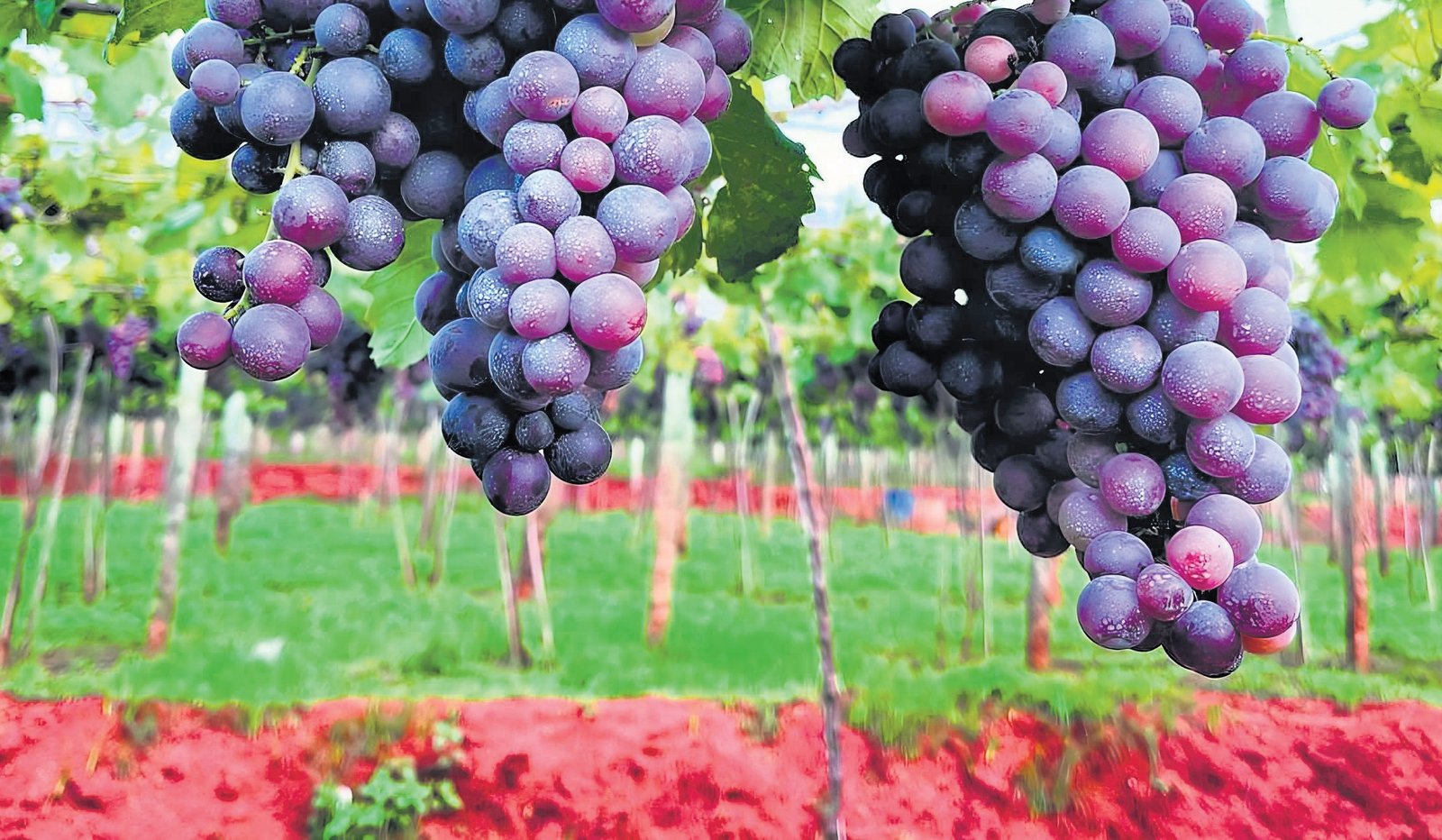
Cumbum Panneer Thratchai
The Vineyard That Never Sleeps: The Sweet Saga of Cumbum Panneer Thratchai
Nestled in the lush embrace of the Western Ghats, a quiet agricultural revolution has been thriving for nearly two centuries. Welcome to the Cumbum Valley, South India’s own grape capital, where a French missionary’s gift has blossomed into a geographical marvel that defies the laws of traditional viticulture.
Picture a vineyard. Chances are, your mind immediately wanders to the sun-drenched, rolling hills of Tuscany, the pristine estates of Bordeaux, or the sprawling, seasonal valleys of Napa. You imagine a distinct season of harvest, a brief, frantic window where vines are stripped of their fruit before retreating into a long, dormant winter slumber. But what if there was a vineyard that never slept? What if there was a place where the air is perpetually sweet with the scent of ripening grapes, where harvest is not a season, but a year-round celebration?
To find this viticultural anomaly, you must travel not to the Mediterranean, but to the deep south of India. Tucked away in the Theni district of Tamil Nadu lies the breathtaking Cumbum Valley. Here, amidst the verdant foothills of the Western Ghats, grows the celebrated Cumbum Panneer Thratchai—a grape so unique, so deeply intertwined with the land and its people, that it has earned the prestigious Geographical Indication (GI) tag. This is the story of South India’s “Grape City,” an extraordinary tale of history, climate, and the relentless human spirit.
The French Connection: A Missionary’s Agricultural Legacy
The story of the Cumbum Panneer Thratchai is an unexpected tapestry woven with threads of European history and Indian agriculture. The grape variety itself is botanically known as Muscat Hamburg, a black grape renowned globally for its intense, sweet, and floral flavor profile. But how did a quintessential European fruit find its true home in the tropics of Tamil Nadu?
The answer dates back to the early 19th century. During the era of colonial expansion, European missionaries traveled across the Indian subcontinent, bringing with them not only their faith but also the agricultural practices and flora of their homelands. Historical records suggest that in 1832, a French Catholic priest introduced this specific grape variety to Tamil Nadu.
Initially, the cuttings were planted in Melapatti, a small village near Krishnagiri in the Salem district. However, it was another French Jesuit priest, Reverend Father Larney, who recognized the untamed potential of the southern terrains. Later in the 19th century, Fr. Larney brought the grape cuttings to Michaelpatti in the Theni district. The French, with their innate understanding of viticulture, likely sought to cultivate grapes to produce sacramental wine for their religious ceremonies.
Little did they know that they were planting the seeds of an agricultural empire. The local farmers affectionately dubbed the fruit “Panneer Thratchai” (Panneer meaning rose water, and Thratchai meaning grapes) because of the fruit’s naturally sweet, floral aroma and the cooling, refreshing effect it had on the body, reminiscent of pure rose water.
The Geography of Sweetness: Nature’s Perfect Microclimate
While the French provided the seed, it was the exceptional geography of the Cumbum Valley that provided the soul. The valley is a geographical masterpiece, an elongated, fertile depression situated at an altitude of 300 to 400 meters above sea level. It is securely cradled by the Varusanadu Hills to the south and the Kodaikanal Hills to the north, forming a natural corridor between Tamil Nadu and the high ranges of Kerala.
This specific topography creates a highly localized microclimate that is nothing short of miraculous for grape cultivation.
- The Soil: The valley floor is blanketed in rich, crumbly red loam and alluvial soils deposited over millennia by the Periyar River and its tributaries. This soil offers the perfect balance of excellent drainage and nutrient retention
- The Water: The region benefits from a robust hydrological network, largely fed by the Periyar Dam (constructed in 1895). The continuous flow of mineral-rich water from the Western Ghats ensures that the vines are never parched, even during the scorching Indian summers.
- The Climate: The sheltered nature of the valley protects the crops from extreme weather, maintaining a moderate temperature range between 18°C and 35°C. The valley receives a balanced share of rainfall from both the Southwest and Northeast monsoons.
It is this precise, unreplicable triad of soil, water, and climate that gives the Cumbum Panneer Thratchai its distinct purplish-brown hue, its compact, tightly clustered bunches, and its unparalleled, rich flavor.
An Agricultural Marvel: The 365-Day Harvest
If you ask a viticulturist in France or California about harvesting grapes year-round, they might tell you it is scientifically impossible. Yet, the farmers of the Cumbum Valley have defied conventional agricultural wisdom.
In most grape-growing regions of India, such as the prominent vineyards of Nashik in Maharashtra, the harvest is strictly seasonal, typically restricted to the months between January and April. In stark contrast, the Cumbum Valley is the only place in India—and one of the few places in the world—where grapes are harvested 365 days a year.
This continuous cycle is not merely a gift of nature; it is a testament to the highly specialized, indigenous farming techniques developed by local cultivators over generations.
- The Pandal System: Farmers employ a high-tech overhead bower or “pandal” (polygon) system. Vines are trained to grow upward and spread horizontally across a wire grid, creating a lush, green canopy. This maximizes sun exposure for the leaves while protecting the hanging fruit bunches from direct, scorching heat.
- Rootstock Innovation: To combat issues of soil and water salinity, modern Cumbum farmers ingeniously graft the Panneer Thratchai onto a wild, highly resilient rootstock known as ‘Dogridge’. This ensures robust growth and high yields regardless of minor environmental stressors.
- Strategic Pruning: The true secret to the year-round harvest lies in the art of staggered pruning. By meticulously cutting back the vines at different times across different plots, farmers manipulate the plant’s natural dormant and fruiting cycles. This staggered approach tricks the vines into producing up to three separate yields per year across the valley, ensuring that fresh grapes are always ready for market.
Today, grape cultivation spans over 5,000 acres across villages like Uthamapalayam, Chinnamanur, and Cumbum. The valley single-handedly accounts for an astounding 85% to 90% of Tamil Nadu’s total grape production, yielding nearly 90,000 tonnes annually and generating a turnover of approximately Rs 280 crore.
Health, Nutrition, and Culinary Versatility
Beyond its economic and historical significance, the Cumbum Panneer Thratchai is a nutritional powerhouse. Unlike the modern consumer preference for seedless varieties, the Panneer grape proudly retains its seeds, which are themselves reservoirs of health.
- Antioxidant Rich: The deep purplish-brown skin of the grape is loaded with resveratrol and anthocyanins—powerful antioxidants known to fight free radicals, reduce inflammation, and lower the risk of chronic cardiovascular diseases.
- Vitamins and Minerals: These grapes are an excellent natural source of Vitamin C, Vitamin K, and vital B-complex vitamins, promoting healthy skin and robust immunity.
- Digestive Health: The fruit is naturally rich in tartaric acid, which acts as a gentle, natural digestive aid, clearing the gut and improving nutrient absorption.
Culinary-wise, the Panneer Thratchai is incredibly versatile. While it is predominantly consumed as a fresh, crisp table fruit, its high sugar content and intense flavor make it ideal for secondary processing. The grapes are widely used to produce high-quality jams, canned juices, naturally sweet raisins, and increasingly, artisanal spirits and wines.
The Crown Jewel: Securing the GI Tag
For decades, the farmers of Cumbum watched as their superior produce was bulk-sold to neighboring states like Kerala and Karnataka, often losing its unique regional identity in the broader market. Furthermore, inferior grapes from other regions were frequently passed off as “Cumbum Panneer,” undercutting the farmers’ livelihoods and damaging the fruit’s sterling reputation.
Determined to protect their heritage, local agricultural bodies, spearheaded by the Kaamayam Thiratchai Vivasayigal Sangam (Kaamayam Grape Farmers Association), embarked on a rigorous legal and scientific journey. Their goal was to prove the unique, intrinsic link between the quality of the Panneer grape and the specific geography of the Cumbum Valley.
Their tireless efforts culminated in a historic victory in April 2023, when the Government of India officially awarded the Cumbum Panneer Thratchai the coveted Geographical Indication (GI) tag. This intellectual property right serves as a legally binding guarantee of authenticity. It ensures that only grapes grown within the defined geographical territory of the Cumbum Valley, adhering to traditional cultivation standards, can be sold under the name. The GI tag has not only safeguarded the legacy of the farmers but has also opened up lucrative avenues for premium pricing and international export.
A Budding Destination: Vineyard Tourism in South India
As the fame of the Cumbum Panneer Thratchai spreads, a new economic avenue is slowly unfurling in the valley: vineyard tourism.
Travelers driving the scenic route between Madurai and the misty hills of Munnar or Thekkady are increasingly pulling over to explore the sprawling grape farms. Recognizing this potential, enterprising farmers have begun opening their farm gates to the public. For a nominal fee—or often for free—tourists can walk beneath the cool, dappled shade of the grape canopies, breathing in the sweet, earthy aroma of the orchards.
These eco-tourism stops offer an immersive experience. Visitors can observe the meticulous care required to maintain the vines, take breathtaking photographs amidst the lush greenery, and purchase freshly harvested grapes directly from the source. Many farms have also set up small kiosks selling freshly pressed, non-alcoholic grape juice, offering a pure, unadulterated taste of the valley’s bounty. While it may not yet possess the highly commercialized, alcohol-centric vineyard culture of Nashik, Cumbum offers a deeply authentic, rustic, and family-friendly agrarian experience.
Challenges and the Road Ahead
Despite the triumphs of the GI tag and booming production, the journey for the farmers of Cumbum is not without its hurdles. The cultivation is highly labor-intensive and requires significant upfront investment, often upward of Rs 7 lakhs per acre.
Farmers continually face challenges such as sudden, unseasonal rains that can split the ripening fruit, and fluctuating market prices that threaten their financial stability. Consequently, there is a growing demand from the farming community for the government to establish a Minimum Support Price (MSP) of Rs 50 per kilogram to provide a safety net against market volatility.
Furthermore, to truly capitalize on the GI tag and target international markets, the region desperately needs enhanced infrastructure. The establishment of state-of-the-art cold storage facilities, dedicated export processing zones, and the easing of licensing restrictions for local wine production are critical next steps. By transforming the valley into a full-fledged agro-processing hub, the economic benefits can be multiplied, securing the livelihoods of the thousands of families who depend on the vines.
The Cumbum Panneer Thratchai is more than just a fruit; it is a living, breathing artifact of South Indian agricultural history. From its serendipitous arrival in the hands of a French priest to its modern-day status as a GI-tagged global treasure, it represents the perfect synergy between a generous land and a dedicated people.
As you bite into the crisp, sweet skin of a Panneer grape, you are not just tasting a burst of summer; you are tasting the mineral-rich waters of the Periyar, the cool winds of the Western Ghats, and the centuries of tireless, rhythmic labor that make the Cumbum Valley the vineyard that never sleeps.