
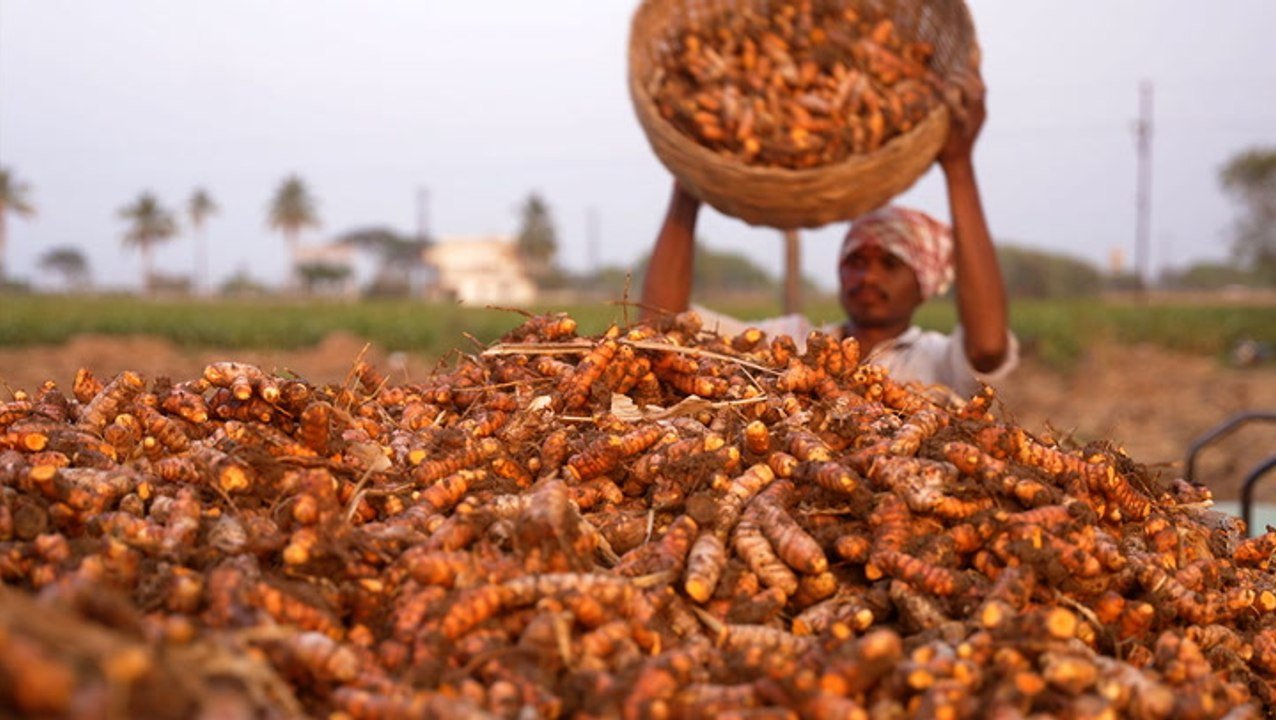
Erode Turmeric
The Radiant Awakening of the Yellow City
In the early morning light, before the tropical sun has fully claimed the horizon, the city of Erode vibrates with a specific, pungent energy. Known as “Manjal Maanagaram” (The Turmeric City), Erode is more than just a pin on the map of Tamil Nadu; it is the beating heart of India’s spice trade. Walk through the sprawling market complexes of Semmampalayam or Perundurai, and you will see a world stained in gold. Every surface—from the gunny bags to the calloused palms of the traders—carries the fine, yellow dust of a crop that has defined this region for millennia. In 2019, this legacy was officially consecrated when Erode Turmeric received its Geographical Indication (GI) tag, an international mark of excellence that honors its history, its unique chemistry, and the labor of thousands of farmers.
Ancient Echoes: From the Atharvaveda to the Sangam Poets
The story of Erode’s turmeric did not begin with modern trade agreements but with the very dawn of Indian civilization. The earliest written whispers of this “Golden Spice” appear in the Atharvaveda (circa 6,000 years ago), where it was prescribed as a miraculous cure for jaundice. By the Sangam era (around 2000 BCE), the Tamil landscape was already intimately acquainted with the crop. The ancient poem Malaipadu Kadaam describes the rhythmic sounds of the mountains—the drums of farmers guarding their turmeric and yam fields against foraging wild boars.
During the golden age of the Chera, Chola, and Pandya kingdoms, turmeric was a prized commodity in global maritime trade. While Arab traders of the 13th century were known to carry the spice across the seas, it was the specific micro-climate of the Kaveri and Bhavani river basins that elevated the Erode variety to a tier of its own. By the early 20th century, the Gazetteer of South India (1901-1906) officially recognized Erode as a premier “export” hub, shipping its golden rhizomes to neighboring districts and beyond.
A Laboratory of Nature: The Secret in the Soil
Why does the turmeric of Erode command such prestige in a country that produces nearly 80% of the world’s supply? The answer is buried in the loamy red and black soil of the district. This specific soil composition, combined with the hot, moist conditions where temperatures fluctuate between 20°C and 37.9°C, acts as a natural crucible for the plant.
The pride of the Erode farmer is the Chinna Nadan (Erode Local) variety. While hybrid varieties may grow faster, the native Chinna Nadan is prized for its longevity and resilience. Scientific analysis reveals that Erode turmeric possesses a curcumin content of 2.5% to 4.5%, providing it with a deep, brilliant yellow-orange hue and an aroma that is both earthy and intense. Furthermore, the fingers of Erode turmeric are famously slender and pest-resistant, capable of maintaining their potency for years after harvest—a trait that makes them the preferred choice for commercial curry powder manufacturers worldwide.
The Ritual of Curing: Turning Earth into Gold
The journey from a dirty, underground rhizome to the polished gold seen in markets is a 10-month labor of love. Sown during the monsoon months of June and July, the crop is harvested in the heat of February and March. But the true magic happens post-harvest through a process known as curing.
Traditional curing involves boiling the fresh rhizomes in large copper or iron vessels. This is a delicate art; over-boiling can ruin the color, while under-boiling makes the final product brittle and susceptible to pests. Historically, a slurry of cow dung and water was used, but modern farmers often use specialized steam boilers to ensure uniform cooking and energy efficiency. Once boiled, the “fingers” are spread out on drying floors for a fortnight, baking under the fierce Tamil Nadu sun until they click when broken. Finally, they are polished—traditionally by manual rubbing or trampling, but now in large mechanical drums—to remove the rough outer skin and reveal the shimmering gold beneath.
The Marketplace: A Theater of Trade
Erode stands as the second-largest turmeric market in India, second only to Nizamabad. The Erode Turmeric Merchants and Godown Owners’ Association, established in 1954, transformed what was once an unorganized cluster of street shops into a computerized powerhouse. At the peak of the season, thousands of bags, each weighing 80 kilograms, arrive daily at the regulated markets.
The auction process is a masterclass in transparency and speed. Farmers display their samples by 9 a.m., and buyers—often with yellow-tinged fingertips—break the roots to inspect the inner color and freshness. Bids are placed online, and within hours, the fate of the harvest is decided. If the price is not right, the farmer has the unique right to refuse the deal, often choosing to store their produce in the association’s massive godowns in hopes of a better market cycle.
The Soul of the Spice: Culture, Medicine, and Resistance
Beyond the economics, Erode turmeric is the soul of South Indian culture. It is an auspicious herb, a “religious marker” found in every temple and home. It dyes the threads of the Thali worn by married women and serves as the centerpiece of the Manjal Neeratu Vizha (turmeric bathing ceremony) that marks a young girl’s transition to womanhood. Its cultural weight is so heavy that in the 1959 film Veerapandiya Kattabomman, the titular anti-colonial hero famously rejected British taxes by asking if the British had ever served his community by “grinding turmeric for them”.
In the world of medicine, Erode’s high-curcumin turmeric is a revered antiseptic and anti-inflammatory agent. This traditional knowledge became a point of national pride in 1997 when the CSIR successfully overturned a U.S. patent on turmeric, proving that the spice had been used for wound healing in India for centuries. Today, it is used in everything from high-end cosmetics and sunscreens to pharmaceutical supplements aimed at fighting cancer and heart disease.
Looking Forward: Challenges in a Changing Climate
The “Yellow City” faces a modern crossroads. While exports from Erode saw a 5% rise in 2025 due to surging post-COVID global demand for immunity boosters, the farmers face the twin shadows of climate change and water scarcity. The 10-month crop is water-intensive, and shifts in the monsoon can devastate a family’s livelihood.
Yet, the spirit of the Erode farmer remains as resilient as the native Chinna Nadan plant. With the adoption of drip irrigation and a growing focus on organic farming, they are ensuring that their “white gold” (as it is sometimes metaphorically called for its value) continues to shine. The GI tag has provided a vital shield against inferior substitutes, ensuring that when a consumer in Germany, Brazil, or Saudi Arabia buys Erode turmeric, they are receiving the authentic, sun-baked essence of the Kaveri river banks.
A Legacy in Gold
Erode Turmeric is more than a culinary additive; it is a bridge between the ancient Vedic healers and the modern global health movement. It represents a history where kings traded in gold and farmers protected their fields with drums. As the world continues to rediscover the power of natural medicine, the demand for this radiant rhizome only grows. In the quiet fields of Kodumudi and Bhavani, the next generation of farmers is already preparing the soil, ensuring that the legacy of the “Yellow City” remains as vibrant and enduring as the color of its most famous harvest.