
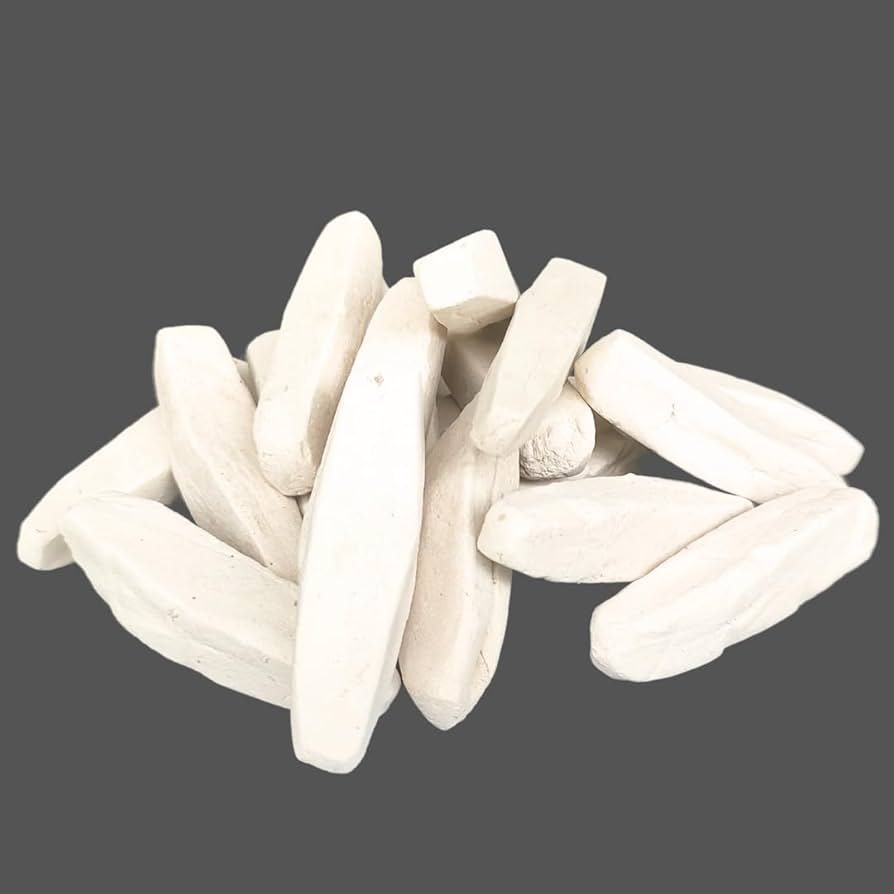
Jaderi Namakatti
The Sacred White Earth: The Legacy, Labor, and Triumph of Jaderi Namakatti
If you begin a journey of curiosity by clicking on the unassuming Wikipedia link for “[Jaderi Namakatti – Wikipedia],” you might expect a brief, encyclopedic description of a piece of white clay. Instead, you will find yourself standing at the threshold of a centuries-old cultural epic. In an age where mass-produced, chemical-laden goods dominate our lives, the story of Jaderi Namakatti is a breathtaking anomaly. It is a narrative of profound spiritual devotion, grueling physical labor, unique geological phenomena, and the unyielding resilience of a tiny artisan community in South India.
To truly understand the weight of this small, finger-shaped stick of white clay, we must travel beyond the digital page. We must venture into the heart of Tamil Nadu, to the sun-baked plains of the Tiruvannamalai district, and explore the intricate relationship between a community, their land, and the divine spaces they help consecrate.
The Philosophy of the Mark
Before delving into the soil from which it is born, one must understand the purpose of the Namakatti. In the rich tapestry of Hindu spiritual practices, particularly within the Vaishnavite tradition, the body itself is considered a sacred vessel—a living, breathing Thaḷi (a temple or sacred space) that houses the divine.
To visually and spiritually signify this belief, devotees apply the Thirunamam (or simply, the Namam) on their foreheads and across twelve specific energy points on their bodies. The traditional Namam is typically drawn in a ‘U’ or ‘Y’ shape using the white paste made from Namakatti. These two outer white lines represent the holy feet of Lord Vishnu, serving as a constant reminder for the devotee to keep the divine feet in their thoughts. The central line, drawn in vibrant red or yellow using Srichoornam, represents Goddess Mahalakshmi, symbolizing prosperity, compassion, and divine grace.
When you step into the majestic, towering stone corridors of a historic Thaḷi in South India—whether it is the sprawling complex of Srirangam, the hilltop sanctuary of Tirupati, or the ancient shrines of Kanchipuram—the pristine white markings adorning the foreheads of the priests, the devotees, and even the majestic temple elephants all share a common, humble origin. Almost all of this sacred white clay traces its roots back to a single, obscure hamlet: Jaderi.
The Geological Marvel of Thenpoondipattu
Jaderi is a small, quiet village located in the Cheyyar taluk of the Tiruvannamalai district. For over three hundred years, approximately 120 to 150 families in this village have dedicated their lives to a single occupation: crafting Namakatti. However, a fascinating geographical twist to this story is that the raw material required for the clay does not actually originate in Jaderi itself.
The pristine white earth is mined from a neighboring hamlet known as Thenpoondipattu. From a geological perspective, the earth found here is not ordinary mud; it is a highly concentrated, naturally occurring deposit of hydrous silicate minerals. Over millions of years, the weathering and natural alteration of silicate rocks have created this specific type of fine-grained, silica-rich clay.
The mining process is incredibly arduous. Artisans must dig deep into the earth, enduring the blistering tropical heat to extract the raw, unrefined silicate rock. Historically, and even today in many instances, these heavy rocks are loaded onto traditional bullock carts and transported back to the artisan workshops in Jaderi. The high silica content is what gives the unrefined rock its chalky, off-white appearance, but it takes an incredible amount of generational skill to transform this rough stone into the smooth, sacred stick known worldwide.
The Alchemy of the Craft: A Symphony of Hand and Earth
The creation of Jaderi Namakatti is a magnificent display of pre-industrial craftsmanship. It is an entirely organic, zero-chemical process that relies on time, nature, and intense manual labor.
The transformation begins with the crushing of the raw silicate rocks. The artisans utilize a traditional, centuries-old method: a heavy stone roller (a chekku) is pulled in a continuous circle by a pair of strong ‘tow’ bullocks (chekku maadu). As the bullocks patiently tread their circular path, the heavy rollers pulverize the hard rocks into a coarse powder. Human hands and feet then continuously turn and stamp the crushed earth to ensure an even consistency.
Once pulverized, the clay undergoes a rigorous, multi-staged filtration process. The powdered earth is transferred into large, water-filled pits or tanks. Here, it is allowed to soak for an astonishing 20 days. This prolonged soaking period is a critical step in the alchemy of the craft. As the mixture rests, the heavier impurities, coarse sand, and undesirable minerals slowly sink to the bottom of the tank. Meanwhile, the ultra-fine, pure hydrous silicate particles remain suspended near the surface, turning the water into a thick, milky-white slurry.
This purified slurry is carefully skimmed off and collected. The clay is then beaten with wooden sticks to remove trapped air and partially dried to achieve the perfect, dough-like consistency. It is at this stage that the true artistry of the Jaderi villagers shines.
Unlike modern ceramics or mass-produced goods, authentic Jaderi Namakatti is never poured into artificial molds or extruded through machines. Every single stick is meticulously shaped by hand. The artisans, predominantly the women of the village, take small pinches of the semi-dry clay and roll them between their practiced palms. In a matter of seconds, they produce perfectly uniform, finger-length cylindrical sticks. The tactile memory embedded in their hands ensures that each stick is identical in size and perfectly smooth in texture.
Finally, the shaped sticks are laid out in the open air to be baked by the fierce South Indian sun for four to five days. The entire production cycle is fundamentally tethered to the weather. During the intense monsoons, production grinds to a complete halt, as the lack of abundant sunlight makes drying impossible, directly impacting the livelihood of the entire village.
Beyond the Spiritual: Medicinal and Ecological Purity
While the religious significance of Jaderi Namakatti is its primary claim to fame, its entirely natural composition bestows it with remarkable traditional medicinal properties. In ancient Ayurvedic and Siddha practices, the hydrous silicate clay was highly valued for its cooling and soothing effects.
When the Namakatti is rubbed on a stone with a few drops of water to create a paste, the resulting application is intensely cooling. Applying it to the forehead is traditionally believed to calm the nervous system, reduce body heat, and prevent energy loss during deep meditation. Furthermore, owing to the specific mineral composition of the Thenpoondipattu earth, the clay acts as a mild, natural antiseptic. For generations, Tamil households have used a diluted paste of this clay as a localized remedy to treat stretch marks caused by childbirth, soothe heat rashes, and calm minor insect bites.
This ecological purity stands in stark contrast to the modern, mass-produced alternatives. As the demand for tilaks grew across India, unscrupulous manufacturers began flooding the market with fake Namakattis made from Plaster of Paris, cheap chalk powder, and hazardous chemical whitening agents. When applied to the skin, these synthetic fakes can cause severe allergic reactions, contact dermatitis, and permanent hyperpigmentation. Authentic Jaderi Namakatti, free from a single drop of artificial dye or chemical binder, remains a paragon of dermatological safety.
The Socio-Economic Battle and the Ultimate Triumph
Despite holding a monopoly on the creation of a product used by millions of devotees globally—from the grand Thaḷis of Tamil Nadu to the diaspora temples in Singapore, Malaysia, and Australia—the artisans of Jaderi have historically lived in deep poverty.
For decades, the supply chain was heavily controlled by ruthless middlemen and powerful merchants. The artisans, lacking formal education and marketing infrastructure, were forced to sell their painstakingly crafted Namakattis at a pitiable wholesale rate—often earning less than a single rupee for a stick that would eventually be sold in foreign markets for dollars. The backbreaking labor, coupled with the exploitation by intermediaries and the existential threat of cheap chemical knockoffs, pushed the craft to the brink. The younger generation, seeing no financial future in the sacred white earth, began migrating to cities in search of alternative employment.
Realizing that their 300-year-old heritage was on the verge of extinction, the villagers united. Forming the ‘Jaderi Tiruman (Namakatti) Producers Society,’ they embarked on a formidable legal and administrative crusade to claim intellectual property rights over their ancestral craft.
Their relentless efforts culminated in a historic victory. In 2023, the Geographical Indications Registry of the Government of India officially granted the highly coveted Geographical Indication (GI Tag) to the Jaderi Namakatti.
This legal milestone was a monumental paradigm shift. The GI tag serves as an ironclad legal shield, recognizing the unique geographical origin, traditional manufacturing process, and specific geological raw materials that define the product. It legally mandates that only the authentic, hand-rolled, sun-dried clay sticks produced by the recognized artisans of the Jaderi region can be marketed and sold under the name “Jaderi Namakatti.”
The GI tag effectively criminalized the sale of the chemical-laden fakes masquerading under the Jaderi name. More importantly, it provided the artisans with unprecedented global recognition, allowing them to bypass exploitative middlemen and command a premium, fair-trade price for their labor. It has infused a new breath of life into the village, ensuring that the legacy of the white earth will be passed down to the next generation.
Conclusion: A Legacy Cast in Clay
The journey from a deep dive into a Wikipedia article to the sun-drenched courtyards of Tiruvannamalai reveals a profound truth about human heritage. The Jaderi Namakatti is infinitely more than a mere ritual accessory. It is a physical manifestation of a community’s soul.
Every time a devotee steps into a Thaḷi and applies that stark, cooling white mark to their forehead, they are not just participating in a religious tradition. They are connecting with the ancient, silicate-rich earth of Thenpoondipattu. They are honoring the calloused, skilled hands of the Jaderi women. They are participating in a 300-year-old legacy that survived exploitation, weathered the rise of industrial chemicals, and emerged victorious through the sheer willpower of its creators. The sacred white earth of Jaderi stands today not just as a symbol of devotion to the divine, but as an eternal monument to the dignity of human labor.