
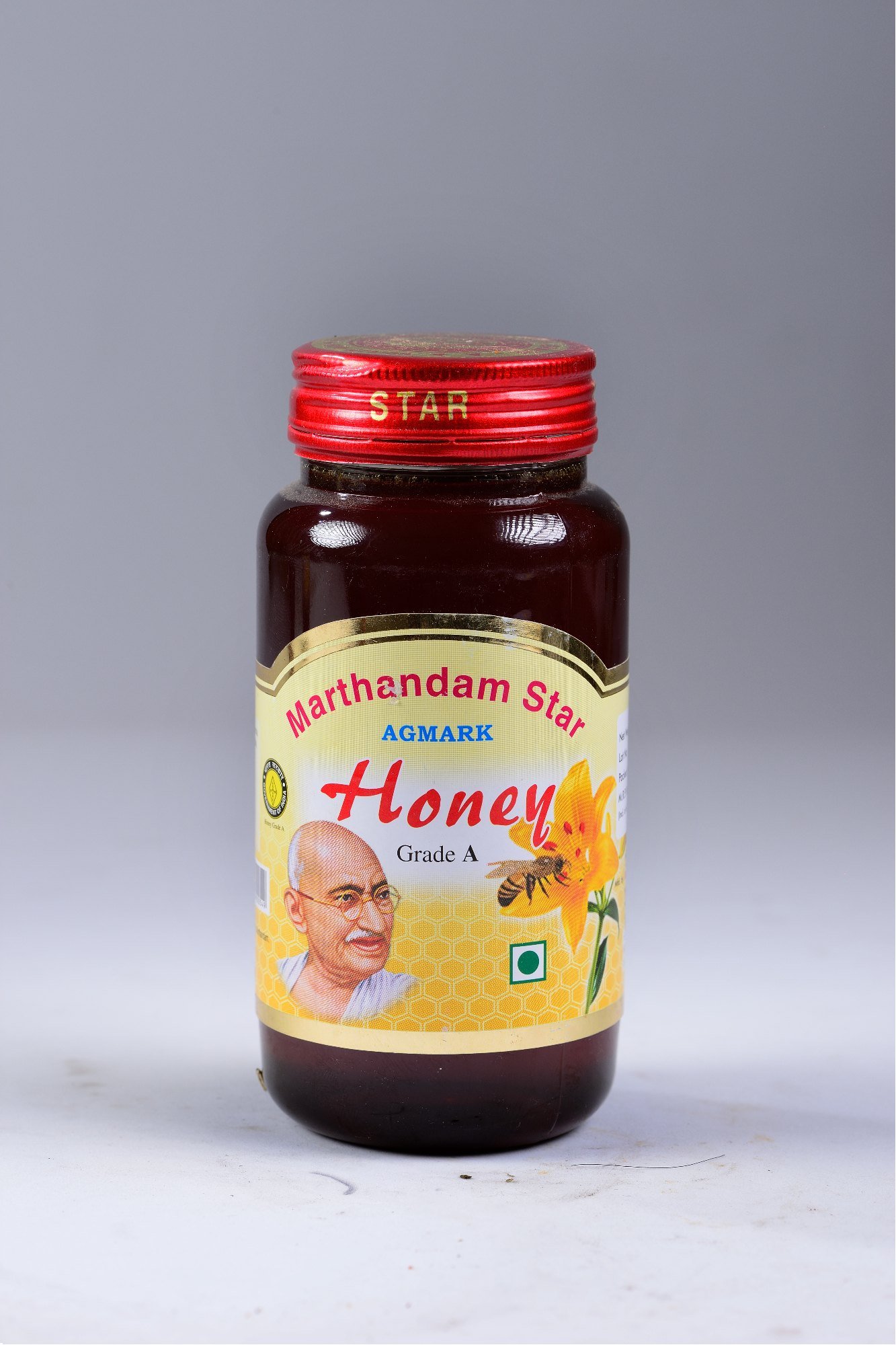
Marthandam Honey
The Golden Nectar of the Deep South: Unveiling the Legacy of Marthandam Honey
When you click on an informational link like “[Creating Marthandam Honey – Wikipedia]”, you might anticipate a straightforward agricultural summary of how bees make honey. Instead, what unravels is a profound, century-old saga of rural upliftment, sustainable ecology, and the sweet taste of collective human triumph.
In a modern culinary landscape where supermarket shelves are flooded with commercially processed, sugar-syrup-laced counterfeits, finding pure, unadulterated honey is akin to discovering liquid gold. Among the countless honey-producing regions in India, one modest town in the Kanyakumari district of Tamil Nadu stands unparalleled: Marthandam. Crowned the “Honey Capital of India,” Marthandam is not just a geographical location; it is the epicenter of a grassroots revolution that changed the Indian apiculture industry forever.
To understand why this specific honey recently earned a coveted Geographical Indication (GI) tag, we must journey back a hundred years, deep into the foothills of the Western Ghats.
The Catalyst of 1924: A YMCA Visionary and the Wooden Box
The story of Marthandam Honey does not begin with a corporate factory, but with a profound socio-economic mission. In the early 1920s, the Kanyakumari region (then part of the princely state of Travancore) was fraught with severe poverty. Agriculture was heavily dependent on erratic monsoons, and the rural population struggled to make a sustainable living.
At the time, the local method of procuring honey was an ancient, dangerous, and highly destructive practice. Indigenous forest dwellers and farmers would trek deep into the treacherous Western Ghats at night. Carrying flaming torches, they would smoke out and often incinerate wild bee colonies hanging from high cliffs and tall trees to steal the honeycomb. This method not only destroyed the bee populations but also yielded honey that was contaminated with ash, smoke, and crushed bee larvae.
Enter Dr. Spencer Hatch, an American agricultural expert and sociologist. In 1924, taking charge of the Rural Demonstration Centre organized by the YMCA (Young Men’s Christian Association) in Marthandam, Dr. Hatch envisioned a way to elevate the local economy without destroying its ecology.
Dr. Hatch introduced the revolutionary “Newton’s Beehive”—a simple, movable wooden box that allowed bees to be domesticated in a farmer’s own backyard.
Instead of climbing perilous cliffs, farmers were taught how to gently transfer wild Apis cerana indica (the Indian honey bee) into these boxes. He also introduced the centrifugal honey extractor, a hand-cranked machine that spun the honey out of the combs without destroying the wax structure, allowing the bees to reuse it. Almost overnight, an archaic, destructive hunt was transformed into a sustainable, scientific, and highly profitable cottage industry.
The Birth of a Cooperative Giant
As the backyard beekeeping movement spread like wildfire across the villages surrounding Marthandam, a new problem arose: exploitation. Independent farmers, lacking marketing knowledge, were being shortchanged by predatory middlemen who bought their pure honey for pennies.
To protect the farmers, the Marthandam Beekeepers’ Co-operative Society was officially established in March 1937. As one of the oldest and most successful beekeeping cooperatives in Indian history, it became a fortress for the artisans. What started with a handful of visionary farmers has grown into a massive network of thousands of beekeepers, collectively producing over 600,000 kilograms of premium honey annually. The cooperative ensured that the farmers received fair wages and that the honey was processed, graded, and sold under the rigorous AGMARK ‘A’ grade standards.
Terroir and Texture: The Science of the Fluid Gold
If you are accustomed to the thick, viscous honey produced in arid regions, your first encounter with Marthandam Honey might surprise you. It has a distinctly fluid, slightly watery consistency. Many uninformed consumers mistakenly believe this fluidity is a sign of adulteration. In reality, it is the ultimate proof of its authentic tropical origin.
- The Humidity Factor: Marthandam is nestled near the Western Ghats, an environment characterized by heavy rainfall and high year-round humidity. When bees collect nectar in this tropical paradise, the nectar itself has a higher water content. Furthermore, the ambient humidity makes it difficult for the bees to fan the honey dry inside the hive. This naturally results in a lighter, freer-flowing liquid that is perfect for drizzling over warm bread or stirring into tea
- The Rubber Estate Miracle: While Marthandam bees forage on a diverse array of wild forest flora and medicinal herbs, their most unique nectar source comes from the region’s sprawling rubber plantations. During the brief window between February and April, rubber trees shed their old leaves and sprout new ones. At the base of these new, tender leaf stalks (petioles), the tree secretes a sweet liquid from “extra-floral nectaries.” The bees harvest this rare leaf-nectar, which imparts a stunning light golden color and a uniquely mild, earthy, and highly distinct flavor profile to the honey.
The Nomadic Harvest: Migratory Beekeeping
The rubber tree nectar flow only lasts for a few months. To keep the bee colonies fed and productive year-round, the farmers of Marthandam engage in a fascinating practice known as migratory beekeeping.
When the local floral resources dry up, the beekeepers load their wooden hives onto trucks under the cover of darkness. They transport millions of bees to neighboring districts in Tamil Nadu and across the border into Kerala. They chase the blooming seasons of different crops, setting up temporary apiaries near expansive fields of sunflower, tamarind, drumstick, and sesame. This nomadic lifestyle not only guarantees a steady supply of multi-floral honey but also dramatically boosts the crop yields of the host farmers through aggressive cross-pollination.
The Art of Traditional Processing and Aging
The industrial honey found in supermarkets is often flash-heated (pasteurized) at extreme temperatures and ultra-filtered. This aggressive processing creates a visually perfectly clear syrup, but it utterly destroys the natural pollen, beneficial enzymes, and antioxidants that make honey a superfood.
Marthandam Honey strictly adheres to an old-world, manual processing philosophy designed to protect the integrity of the nectar:
- Wax-Coated Aging: Once extracted, the raw honey is poured into massive iron drums that have been meticulously coated on the inside with natural beeswax. This prevents the acidic honey from reacting with the metal. The honey is left to rest undisturbed for 4 to 9 months
- Gravity Filtration: During this long aging process, gravity does the hard work. Excess moisture naturally evaporates, and heavier impurities (like stray wax or pollen clumps) either settle to the bottom or float to the top, leaving pristine honey in the middle.
- The Double Boiler Method: Finally, the honey is gently heated using a traditional water-bath method. The honey container is placed inside boiling water, ensuring the direct heat never scorches the honey. This gentle warming eliminates natural, fermentation-causing yeasts while keeping the vital nutrients entirely intact
Health Benefits: A Spoonful of Wellness
Because it skips the destructive ultra-filtration process, Marthandam Honey retains its status as a potent Ayurvedic medicine.
- Antioxidant Powerhouse: The diverse wild flora of the Western Ghats infuses the honey with high levels of flavonoids and phenolic compounds, which combat free radicals.
- Natural Antibacterial: Its slightly acidic pH (between 3.2 and 4.5) naturally inhibits bacterial growth, making it a traditional topical remedy for minor cuts and burns.
- Respiratory Relief: Mixed with a pinch of black pepper or ginger juice, this fluid honey is a centuries-old South Indian remedy for soothing sore throats, persistent coughs, and asthma symptoms.
The Shield of Authenticity: Earning the GI Tag
With a reputation that spans the globe, Marthandam Honey inevitably became the target of counterfeiters. Unscrupulous companies began bottling cheap, artificially colored corn syrup and labeling it as “Marthandam Honey,” threatening the livelihood of the indigenous farmers and deceiving consumers.
To put an end to this exploitation, the Marthandam Beekeepers’ Co-operative Society embarked on a rigorous legal battle. Their dedication paid off monumentally in 2023 when the Government of India officially awarded Marthandam Honey the Geographical Indication (GI) tag.
This coveted intellectual property status acts as a legal fortress. It mandates that any product sold under the name “Marthandam Honey” must strictly originate from the specific geographical region of Kanyakumari, rely on the local floral biodiversity, and be processed using the traditional, sustainable methods perfected over the last century.
A Legacy in Every Drop
A jar of authentic Marthandam Honey is far more than a pantry staple; it is a time capsule. It holds within it the bold vision of Dr. Spencer Hatch from 1924, the tireless nocturnal migrations of the local farmers, the delicate ecosystem of the Western Ghats, and the collective strength of a cooperative that refused to be beaten by industrialization. The next time you stir a spoonful of this golden, fluid nectar into your morning cup, remember that you are tasting a century of history, resilience, and unparalleled natural purity.