
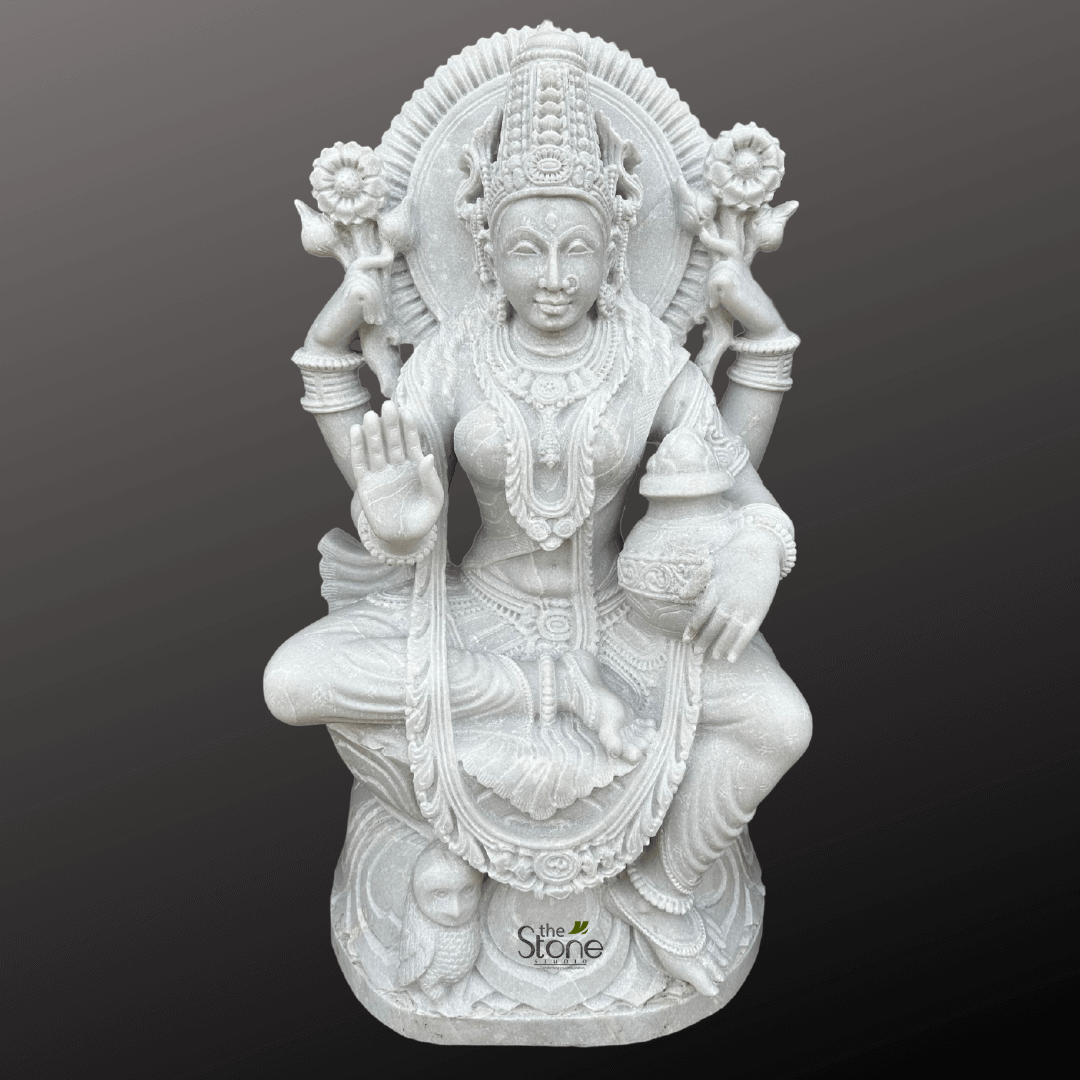
Myladi Stone Carvings
The Chisel’s Symphony: Unearthing the 600-Year-Old Legacy of Myladi Stone Carvings
If you travel to Kanyakumari, the southernmost tip of India, your itinerary will likely be dominated by the confluence of the three seas and the breathtaking sunrise. But just a few kilometers away from the crashing waves lies a small, dusty village where the air hums with a different kind of rhythm—the relentless, musical clinking of iron chisels striking solid rock.
If you look up “Creating Myladi Stone Carvings” on Wikipedia, you will find a modest entry describing a traditional stone-carving craft utilizing Krishnasila stone in the Kanyakumari district of Tamil Nadu. However, underneath that simple definition lies a 600-year-old legacy of artisanal genius, mythological intrigue, and a deep-rooted spiritual science. Recently catapulted to global prominence with a Geographical Indication (GI) tag, the story of the Myladi stone carvers is a fascinating journey of how human hands can breathe life into cold, silent mountains.
The Cradle of the Craft: A Royal Commission
The genesis of Myladi as an artisans’ village is inextricably linked to one of South India’s most magnificent architectural marvels: the Suchindram Thanumalayan Temple.
Over six centuries ago, during the reign of the erstwhile Travancore kingdom, a massive project was commissioned to build the Suchindram Temple, renowned today for its towering 134-foot gopuram (gateway tower) and its astonishing musical pillars. To execute this monumental task, the kingdom summoned the finest stone sculptors from regions like Kazhukumala, Tirunelveli, and Sankarankovil.
These master artisans—descendants of the traditional Viswakarma or Kammalan community, later known specifically as Kaltachans (stone carpenters)—needed a steady supply of high-quality granite. They found the perfect geological goldmine in the nearby Thengampothai hills of Myladi. The rocks here were ideal for intricate carving. Once the decades-long construction of the Suchindram Temple concluded, many of the artisans chose not to return home. They settled around the quarries, and the rocky, uninhabited landscape blossomed into the artisanal village of Myladi.
The Magic of Krishnasila: Male and Female Rocks
The soul of a Myladi sculpture lies in its primary raw material: Krishnasila (Granite gneiss). It is an incredibly dense, durable stone that yields beautifully to the chisel, available naturally in shades of brown, gray, red, pink, and black.
But what truly sets the Myladi artisans apart is their inherited, almost supernatural understanding of the stone’s acoustic and physical properties. Drawing from the ancient legends of Perunthachan (the mythical master carpenter), the sculptors categorize the unyielding rocks into distinct genders based purely on sound and texture:
- Male Rocks: When struck with a hammer, these rocks produce a rough, blunt sound. They are exceptionally hard and literally throw off sparks when chiseled. These robust stones are exclusively selected to carve idols of male deities like Lord Shiva, Vishnu, and Hanuman.
- Female Rocks: When struck, these rocks produce a resonant, sweet, and metallic ringing tone. They are relatively softer and are chosen to sculpt female deities like Goddess Parvati, Lakshmi, and Durga.
This acoustic sensitivity is the exact same ancestral science that allowed their forefathers to carve the legendary musical pillars of Suchindram, which emit distinct classical musical notes (the Saptha Swaras) when tapped.
Forged in Faith: The Artisanal Process
Transforming a massive boulder into a revered deity is a grueling, multi-stage process that marries sheer physical labor with strict religious mathematics.
- Selection and Consecration: A stone is never viewed merely as raw material. Once selected, prayers are offered, and camphor is lit around the rock to honor the divine presence dormant within it.
- The Geometry of the Divine (Thaalam): The artisans do not carve based on freehand imagination. They strictly adhere to ancient Shilpa Shastras (manuals of sculptural design) using a proportional measurement system called Thaalam. Every aspect of the body—from the tilt of the hip to the length of the fingers—is mathematically calculated to ensure perfect symmetry and spiritual resonance.
- Carving and Polishing: Using heavy hammers, the rough shape is aggressively chipped away. Then, using increasingly finer chisels, the intricate details—the folds of clothing, the ornate jewelry, and the gentle curve of a smile—are coaxed out of the stone. Finally, the statue undergoes days of rigorous hand-polishing using water and abrasive tools until it is flawlessly smooth.
- The Eye-Opening Ceremony (Netra Unmeelanam): Even after the sculpture is physically complete, it remains just a stone until the final, highly sacred ritual. Using a special chisel or a golden needle, the master sculptor carefully carves the pupils of the eyes. According to tradition, it is at this precise moment that the stone awakens and becomes a God.
The Soul of a Sacred Space
Beyond serving as standalone idols, the Myladi stone carvings are fundamentally architectural soul-stones. They are the intricate pillars, the protective yalis (mythological beasts), and the very sanctum walls that define the spiritual geometry of a temple. Whether it is a sacred space known as a தளி in Tamil Nadu, a serene തളി in Kerala, an ancient ತಳಿ in Karnataka, a vibrant తళి in Andhra, or a peaceful तळि in the north, these hand-carved Krishnasila stones elevate a mere physical structure into a living, resonant sanctuary. The rhythmic striking of the chisel in Myladi is quite literally the heartbeat of countless places of worship across India and the global diaspora.
The Shield of the GI Tag
Despite their undeniable historical contribution, the artisans of Myladi operated in the shadows for centuries, often struggling against the influx of cheap, machine-made casts and fiberglass imitations.
To protect this living heritage, a long battle for official recognition was waged by the Myladi Stone Workers Cottage Industrial Cooperative Society. Their efforts were finally rewarded in March 2023 when the Government of India officially granted the Myladi Stone Carvings the Geographical Indication (GI) tag.
This intellectual property right serves as a legal fortress. It guarantees that any sculpture sold under the “Myladi” name is authentically hand-carved using traditional Shastra methods by the indigenous artisans of the region. It has not only preserved the purity of the craft but has also drastically elevated its value in international markets.
Modern Challenges: The Silent Quarries
Yet, the survival of this 600-year-old craft hangs in a delicate balance. In recent years, severe environmental regulations and bans on local quarrying have silenced the nearby Thengampothai mountains.
Today, the artisans are forced to import granite from distant quarries in Tirunelveli district, such as Karunkulam. This not only exponentially increases their transportation and raw material costs but also forces them to work with stones that lack the specific, cooperative texture of the original Myladi Krishnasila. Furthermore, the grueling physical demands of the job, coupled with historically low profit margins, are driving the younger generation toward corporate jobs in the cities, leaving only a handful of families to carry the torch.
The Myladi stone carvers are not just artisans; they are the custodians of a sacred, ancient science. Every strike of their chisel is a testament to human devotion and architectural brilliance. As modern cities rise in glass and steel, the dusty workshops of Myladi stand as a stubborn, beautiful reminder of an era where art, science, and spirituality were inextricably carved from the same stone.