
Ooty Varkey
The Epic Saga of Ooty Varkey
Picture this: You are standing on a misty balcony in Udhagamandalam, affectionately known as Ooty. The crisp mountain air, carrying the faint, refreshing scent of eucalyptus and pine, brushes against your face. In your hands is a steaming cup of freshly brewed Nilgiri tea. But any local will tell you that a cup of Ooty tea is simply incomplete without its legendary, crunchy companion—the Ooty Varkey.
When you search for “Creating Ooty Varkey” on Wikipedia, you are introduced to a modest description of a crispy, vegetarian snack native to the Nilgiris district of Tamil Nadu. However, to relegate the Ooty Varkey to a mere “biscuit” is to do a great disservice to its rich heritage. This golden, flaky, mildly sweet, and slightly salty pastry is a bite-sized piece of history. It is a testament to culinary adaptation, local ingenuity, and a fierce fight for cultural preservation. Recently crowned with a Geographical Indication (GI) tag, the Ooty Varkey has officially taken its place among India’s elite heritage foods. Let us embark on a deep dive into the fascinating origins, the secret ingredients, and the artisanal craftsmanship behind the Blue Mountains’ most famous snack.
The Colonial Roots: A Delicious Accident of History
To understand the birth of the Ooty Varkey, we must travel back to the 18th and 19th centuries. During the British Raj, the sweltering heat of the Indian plains drove colonial officials to seek refuge in the cooler, temperate climates of the hills. Ooty, with its rolling meadows and chilly weather, became the designated summer capital of the Madras Presidency.
As the British established their settlements, they brought along their culinary habits, particularly their beloved tradition of afternoon tea. This ritual demanded accompaniments—specifically, European-style cookies, biscuits, and delicate French puff pastries. Local Indian bakers in the region were suddenly tasked with replicating these complex, buttery European baked goods.
However, the local bakers faced a challenge. They did not have access to the exact ingredients, commercial yeast, or the sophisticated baking equipment used in London or Paris. Armed with indigenous ingredients, sheer culinary intuition, and basic wood-fired ovens, they began to experiment. The result was a brilliant fusion: a pastry that possessed the flaky, multi-layered texture of a French puff pastry but was grounded in the robust, earthy flavors of local Indian wheat and ghee.
The etymology of the name “Varkey” is as richly layered as the pastry itself, shrouded in local folklore and linguistic debate:
- The Urdu Connection: Many food historians believe the name is derived from the Urdu word Varq, which translates to a “thin layer” or “leaf” (similar to the edible varq used to garnish Indian sweets). Given the hundreds of paper-thin layers in the pastry, this is a highly plausible theory.
- The Master Baker: Another popular local legend attributes the invention to an early baker from Kerala who migrated to the Nilgiris to work in the plantations. His name was supposedly Varkey, and when the British praised his accidental creation and asked what it was called, he proudly offered his own name
- The Tamil Root: Purists of the regional dialect suggest it comes from the Tamil word Varukkal, which means “to fry” or “to roast,” referencing the intense heat and baking process the dough undergoes.
Regardless of how it got its name, the Varkey quickly transcended its colonial origins. It moved from the elite tea parties of British officers to the bustling local tea stalls (nair kadas) frequented by plantation workers, becoming the ultimate equalizing comfort food of the hills.
The Secret in the Dough: Mava and the Mountain Magic
What makes the Ooty Varkey fundamentally different from a standard puff pastry or a generic bakery biscuit? The answer lies in a closely guarded, generations-old secret ingredient known simply as Mava, combined with the unique geographical blessings of the Nilgiris.
If you attempt to bake a Varkey in the sweltering heat of Chennai or the dry climate of Delhi using standard commercial yeast, it will likely taste like an ordinary biscuit. Authentic Ooty Varkey makers completely shun artificial raising agents. Instead, they rely on Mava—a natural, homemade starter dough or mother culture.
To prepare the Mava, bakers create a specialized mash made from overripe local bananas, semolina (rava), refined wheat flour (maida), and a touch of sugar. This mixture is blended with a portion of leftover dough from the previous day’s batch. This natural starter is left to ferment. The fermentation process is where the magic happens, and it is heavily dependent on the local environment.
The pristine, mineral-rich spring water of the Blue Mountains, combined with the region’s consistently cool climate (averaging between 10°C and 25°C during the summer), forces the dough to ferment at an incredibly slow pace. This extended, cold fermentation allows complex flavor profiles to develop—yielding that signature mild sweetness and a subtle, tangy depth that cannot be rushed or artificially replicated.
Furthermore, the Ooty Bakery Owners Association has proudly maintained a strict ethical and dietary standard: the absolute prohibition of animal fat. While traditional European puff pastries rely heavily on animal-derived shortenings or lard to achieve their flakiness, Ooty Varkey is a strictly vegetarian product, utilizing only high-quality vegetable oils, vanaspati, and pure ghee.
The Craftsmanship: Layers of Perfection
Creating the perfect Ooty Varkey is an exhausting, labor-intensive art form that demands immense physical stamina and patience. A single batch, from the mixing of the dough to the final bake, takes approximately 12 hours. Unlike modern, highly mechanized biscuit factories, the soul of the Varkey lies in manual craftsmanship.
- Kneading the Foundation: The process begins by combining wheat flour, sugar, a pinch of salt, and ghee with the fermented Mava starter and fresh mountain water. The dough is rigorously kneaded by hand until it reaches a soft, pliable consistency. It is then covered with damp cloths and left to rest for several hours, allowing the natural gluten networks to relax and expand
- The Art of Layering (Lamination): This is the most crucial step. The rested dough is transferred to a massive, oil-greased wooden workbench. Using heavy rolling pins, the bakers flatten the dough into a massive, paper-thin sheet that is almost translucent. A specially prepared paste made of oil, ghee, and flour is generously slathered across the entire surface.
- The Letter Fold: The artisan then carefully folds one-third of the dough sheet inwards, and then folds the opposite side over it, mimicking the folding of a business letter. More of the ghee paste is applied, and the folding process is repeated multiple times. This intense lamination technique is what traps microscopic layers of air and fat between sheets of dough, guaranteeing the spectacular flaky crunch upon baking
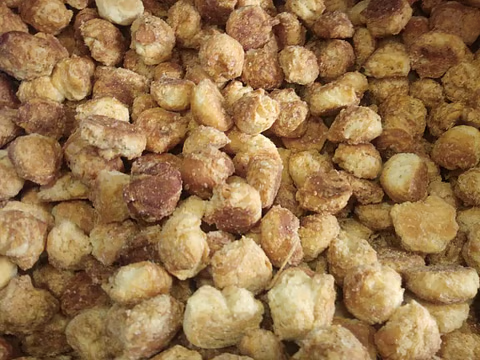
- Shaping the Varkey: The folded dough is sliced into long, thick strips. While some modern variations are cut into neat squares, the most authentic and traditional Ooty Varkey features a rustic, imperfect shape. The artisan swiftly moves down the strip, pinching and pulling off small chunks of dough with their fingers, giving the Varkey its characteristic rugged, uneven crown.
- The Trial by Fire: The shaped pieces are arranged on massive iron trays and slid into traditional, wood-fired brick ovens (veragu aduppu). Baking in a wood-fired oven is an exercise in sensory intuition; there are no digital temperature gauges. The baker relies on the smell of the caramelizing sugar and the color of the crust to know when the pastry is done. The moderate, steady heat of the firewood melts the layers of ghee, separating the dough into distinct, crispy flakes, while imparting a very faint, nostalgic smokiness to the final product.
The Battle for Authenticity: Securing the GI Tag
For decades, the fame of the Ooty Varkey proved to be a double-edged sword. As domestic tourism boomed, the demand for this Nilgiri delicacy skyrocketed. Capitalizing on this, countless commercial bakeries in the plains of Tamil Nadu and beyond began churning out cheap, machine-made, yeast-leavened biscuits and aggressively marketing them under the “Ooty Varkey” name. These imitations often lacked the traditional Mava, the mountain water, and the labor-intensive lamination process, significantly diluting the heritage of the original product.
Realizing that their generational livelihood and cultural identity were under threat, the Ooty Bakery Owners Association—representing over 90 traditional bakers in the region—banded together. In 2015, they formally initiated the arduous legal process of applying for a Geographical Indication (GI) tag.
They presented compelling evidence to the GI registry, detailing the unique climatic factors, the specific water quality of the Nilgiris, and the traditional, hand-crafted methods that inextricably linked the true Varkey to its geographical birthplace. After years of stringent examinations, scientific parameter checks, and legal advocacy, justice was served. In the 2022-2023 cycle, the Government of India officially accorded the Ooty Varkey the GI Tag (Application No. 529, recognized as the 445th GI-tagged product of India).
This monumental victory means that today, it is illegal for any manufacturer outside the designated geographical boundaries of the Nilgiris, or anyone not adhering to the traditional recipe, to sell their product as “Ooty Varkey.” It has safeguarded the economy of local artisans and assured consumers that when they buy a GI-tagged Varkey, they are tasting the genuine essence of the Blue Mountains.
How to Savor the Varkey: A Cultural Ritual
Eating an Ooty Varkey is a ritual in itself. While its crispy, crunchy texture makes it a delightful standalone snack, its true potential is unlocked when paired with a beverage.
- The Classic Dip: The most revered method is dipping the Varkey into a piping hot cup of robust Nilgiri tea or South Indian filter coffee. The hundreds of microscopic layers act like a sponge, instantly soaking up the warm liquid. The trick is to bite into it just before it disintegrates—experiencing a magical contrast of a soft, tea-infused exterior and a slightly crunchy core.
- The Comfort Bowl: For a hearty, comforting breakfast, many locals crumble two or three Varkeys into a bowl of hot milk. Within minutes, it softens into a delicious, porridge-like consistency, beloved by children and the elderly alike.
- The Rich Indulgence: For those wanting a decadent treat, splitting a warm Varkey down the middle and slathering it with fresh, homemade butter elevates the pastry to gourmet levels.
From a makeshift colonial substitute to an internationally recognized, GI-tagged culinary masterpiece, the journey of the Ooty Varkey is nothing short of extraordinary. It is a brilliant example of how local geography, traditional wisdom, and sheer human craftsmanship can elevate a few simple ingredients into an iconic cultural symbol. In an age dominated by mass-produced, heavily processed snacks, the Ooty Varkey stands tall as a beacon of artisanal integrity.
The next time you find yourself winding up the hairpin bends of the Nilgiri ghats, make sure to stop by a local bakery. As you bite into the warm, flaky layers of an authentic Ooty Varkey, you are not just enjoying a biscuit; you are tasting over two centuries of history, the pure waters of the mountains, and the enduring spirit of the artisans who refuse to let their heritage fade away.