
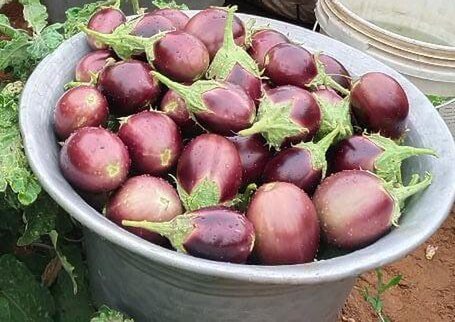
Vellore Spiny Brinjal
The Crown Jewel of the Palar Basin: The Unyielding Legacy of the Vellore Spiny Brinjal
you would be greeted by a concise, factual overview of a regional vegetable crop. You would read about its geographic origin, its recent accolades, and its botanical characteristics. But to truly understand the soul of this remarkable plant, one must look beyond the screen and step into the sun-baked, red-soil fields of northern Tamil Nadu.
In an era where global agriculture is increasingly dominated by genetically uniform, mass-produced hybrid crops engineered for perfectly smooth skins and endless shelf lives, the Vellore Spiny Brinjal—known locally as the Elavambadi Mullu Kathirikai—stands as an act of delicious rebellion. It is a fierce, heavily armored, and fiercely guarded heirloom vegetable that tells a story of climatic resilience, centuries-old farming traditions, and an unparalleled culinary heritage. This is the deep dive into the history, the science, and the flavor of a vegetable that recently earned its rightful place on India’s Geographical Indication (GI) map.
The Anatomy of an Armored Survivor
To the uninitiated, the first encounter with a Vellore Spiny Brinjal can be somewhat intimidating. Unlike the smooth, plump, deep-purple eggplants that line the aisles of modern supermarkets, this native variety wears its defenses proudly.
The plant itself is a fortress. Every part of the crop’s anatomy—the stems, the leaves, and most notably the calyx (the green, cap-like crown that connects the fruit to the stem)—is covered in sharp, prominent thorns. These spines are not a botanical accident; they are a masterpiece of evolutionary adaptation. In the harsh, pest-heavy tropical environments where these plants thrive, the thorns act as a natural, impenetrable shield against insects and foraging animals. Because pests find it incredibly difficult to navigate the spiky terrain to lay eggs or feed, the plant boasts a naturally high resistance to disease and pest attacks. This organic defense mechanism drastically reduces the need for synthetic chemical pesticides, making it a champion of sustainable farming.
Past the intimidating crown, the fruit itself is a visual marvel. The Mullu Kathirikai is perfectly oval, medium-sized, and possesses an incredibly glossy, waxy sheen. Its color palette is a vibrant, swirling mix of deep violet and blushing pink, often adorned with faint white stripes and finishing with a distinct tinge of light green at the distal end. Weighing in at an average of just 40 grams per fruit, it is a dense, heavy-for-its-size vegetable that hints at the rich, fleshy interior hidden beneath its tough, shiny skin.
Roots in the Sun-Baked Earth: A Century-Old Legacy
The story of this resilient vegetable begins in the quiet, agrarian hamlet of Elavambadi, situated in the heart of the Vellore district. While Elavambadi is widely recognized as the epicenter and birthplace of this specific crop, its cultivation has historically spread through the neighboring regions of Anaicut, Kaniyambadi, Gudiyatham, K.V. Kuppam, Katpadi, and Pernambut.
The history of the Vellore Spiny Brinjal is not built on oral folklore alone; it is etched into the very bureaucratic foundation of the region. When researchers and legal advocates began the arduous process of applying for a Geographical Indication tag, they didn’t just rely on the word of local village elders. They turned to the ‘Adangal’—the traditional village administrative land records maintained by the state revenue department. These dusty, meticulously kept ledgers revealed a continuous, unbroken chain of cultivation spanning centuries. Generation after generation, farmers in this specific agro-climatic zone have been planting, harvesting, and saving the seeds of the Elavambadi Mullu Kathirikai.
The vegetable has long been a point of regional pride. Decades ago, when former Chief Minister of Tamil Nadu, M. Karunanidhi, inaugurated the pioneering Uzhavar Sandhai (Farmers’ Market) in Vellore, he specifically singled out the Vellore Spiny Brinjal in his address, praising its rare qualities and unique ties to the local soil. Contemporary food historians, foreign travelers traversing the Madras Presidency in the past, and modern-day culinary bloggers have all meticulously documented the unmatched taste and peculiar appearance of this regional treasure.
Thriving in the Crucible: Agriculture and Agro-Climate
Vellore is notoriously hot. During the peak of summer, the district turns into a veritable crucible, with scorching temperatures and a historically fickle monsoon causing frequent water scarcity. Yet, it is exactly this harsh environment that birthed the Vellore Spiny Brinjal.
This crop is a textbook example of drought tolerance. It is deeply and uniquely linked to the specific agro-climatic conditions and the well-drained red soil of the Palar river basin. Cultivated across three main seasons—Kharif, Rabi, and summer—the plant requires minimal water compared to hybrid varieties. It is an open-pollinated, low-input crop, meaning farmers do not need to buy expensive seeds from multinational corporations every season; they simply save the best seeds from their previous harvest.
Despite the rugged conditions, the yield is astonishing. A healthy, cluster-bearing crop can yield between 40 to 45 tonnes per hectare over a duration of 140 to 150 days. The harvest, however, requires immense skill. Plucking a cluster of soft, fleshy vegetables from a bush bristling with sharp thorns without damaging the fruit—or the farmer’s hands—is an art form passed down through local agricultural families.
Furthermore, recent agricultural economic studies have highlighted the immense viability of cultivating this crop organically. Because of its inherent pest resistance, organic farming of the Vellore Spiny Brinjal yields a significantly higher Benefit-Cost Ratio for farmers compared to conventional, chemical-heavy inorganic farming, ensuring a profitable and sustainable livelihood for the region’s agricultural sector.
The Sacred Offerings: Culture, Community, and the Thaḷi
In the cultural tapestry of Tamil Nadu, agriculture and spirituality are inextricably intertwined. Food is never just sustenance; it is a bridge between the mortal and the divine. For the farmers of the Vellore district, the relationship with their land is deeply reverential, and it is a long-standing tradition to offer the very first and finest yield of their harvest to the gods before it ever reaches the commercial markets.
The Vellore Spiny Brinjal holds a place of profound cultural honor in this regard. During regional harvest festivals and auspicious days, these vibrant, thorny-crowned vegetables are carried to the local Thaḷi (Temple/Space). Whether it is a modest, centuries-old village shrine under the shade of a banyan tree, or the magnificent, sprawling stone corridors of the Jalakandeswarar Thaḷi situated within the moat-encircled Vellore Fort, the brinjal is central to the ritualistic offerings. Prepared with utmost purity and devotion, it is served as a sacred padayal (food offering) to the presiding deities. Once the rituals conclude, this sanctified food is distributed among the community. Through this practice, the Mullu Kathirikai transcends its botanical identity, becoming a symbol of communal harmony, shared heritage, and divine blessing.
The Culinary Alchemist’s Dream: Taste, Texture, and Nutrition
Why go through the trouble of navigating thorns and harsh climates for an eggplant? The answer lies entirely in the eating. The culinary profile of the Vellore Spiny Brinjal is so distinct that it commands a premium price and a fiercely loyal following among South Indian chefs and home cooks alike.
Most commercial eggplants have a high water content, which causes them to turn mushy and lose their structural integrity when cooked down in curries. The Vellore Spiny Brinjal, however, possesses a dense, firm, and meaty flesh with surprisingly few seeds. When raw, it carries a slightly pungent, almost bitter note. But when subjected to heat, a culinary alchemy occurs. The bitterness mellows out, transforming into a rich, earthy sweetness that absorbs complex spices without disintegrating.
It can be baked, barbecued, deep-fried to a crisp, roasted over an open flame for a smoky mash, or pickled. However, its ultimate destiny is often realized alongside the legendary biryanis of the region (Arcot, Ambur, and Vaniyambadi biryanis). The brinjal is the star ingredient in Kathirikkai Serwa (or Kathirikkai Gothsu / Baghara Baingan style accompaniments)—a tangy, spicy, peanut-and-sesame-based gravy that acts as the perfect foil to the rich, meaty rice. It is equally revered when cooked whole in a tamarind-based Ennai Kathirikkai (oil brinjal) curry or a traditional Vathalkuzhambu.
Beyond its gastronomic superiority, it is a nutritional powerhouse. It boasts a protein content of roughly 2%, alongside 10.5 mg of Vitamin C per 100 grams. Its deep purple-pink skin is rich in nasunin, a potent antioxidant known to protect brain cell membranes, regulate blood sugar, and support cardiovascular health. The vegetable also boasts an excellent natural shelf life, surviving up to three days at sweltering room temperatures and over a week when refrigerated.
Crowning Glory: The Geographical Indication (GI) Tag
For decades, the fame of the Vellore Spiny Brinjal was localized, making it vulnerable to bio-piracy and the influx of cheaper, visually similar but gastronomically inferior knock-offs in the market. To protect the heritage of the farmers and the authenticity of the crop, a massive legal and bureaucratic effort was mounted.
Spearheaded by the South India Multi-State Agriculture Cooperative Society Limited (SIMCO) based in Vellore, and represented by prominent government advocate and Intellectual Property Rights (IPR) attorney P. Sanjai Gandhi, a comprehensive application was filed in 2021. Backed by centuries of ‘Adangal’ records, botanical data, and historical literature, the application was airtight.
In February 2023, the Government of India officially conferred the prestigious Geographical Indication (GI) tag upon the Vellore Spiny Brinjal. It made history as the very first brinjal variety from Tamil Nadu to earn this distinction. This legal framework ensures that no one outside the registered and authorized geographical area can cultivate and sell a vegetable under the name “Vellore Spiny Brinjal.” It elevated the crop from a regional secret to a nationally recognized treasure, providing immense economic protection and a potential export boost for the farmers of Elavambadi and its surrounding hamlets.
The story of the Vellore Spiny Brinjal is a masterclass in the importance of preserving indigenous biodiversity. It reminds us that our ancestors cultivated crops that worked with the environment rather than fighting against it. This heavily armored, drought-resistant, fiercely delicious vegetable has survived the test of time, the harshness of the Vellore sun, and the threat of modern homogenization.
The next time you enjoy a plate of South Indian biryani, take a closer look at the rich, tangy brinjal curry served alongside it. If you are lucky, you might just be tasting the centuries-old legacy of the Elavambadi fields.