
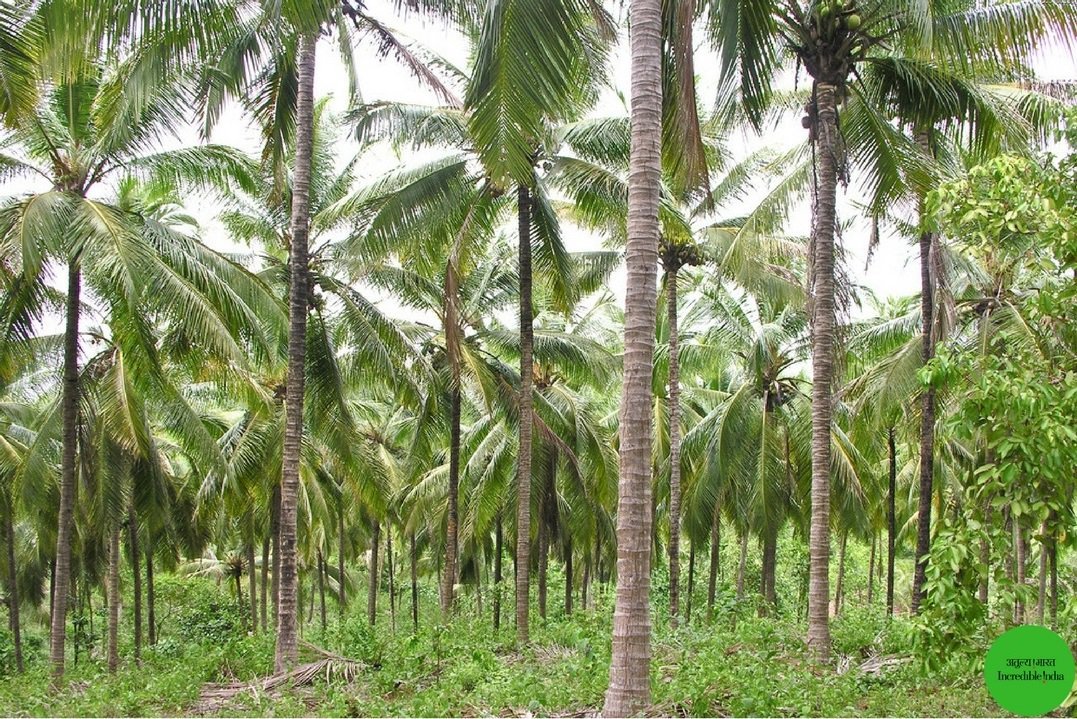
Eathomozhy Tall Coconut
In the southernmost tip of peninsular India, where the Arabian Sea, the Bay of Bengal, and the Indian Ocean converge in a tumultuous embrace, lies the Kanyakumari district. Here, amidst the saline red soils and the whispering sea breeze, stands a botanical giant that has defined the region’s landscape and economy for over a century. This is the story of the Eathomozhy Tall Coconut, a variety so distinct and superior that it earned the prestigious Geographical Indication (GI) tag in 2008, placing it in the pantheon of India’s most protected and celebrated agricultural treasures.
The Genesis: Nature’s Masterpiece in Eathomozhy
The origin of the Eathomozhy Tall Coconut is a tale of natural selection and human stewardship. Centered around the village of Eathomozhy in Kanyakumari, this variety is a distinct ecotype evolved from the West Coast Tall lineage. For generations, the local farming community—primarily small-scale families—acted as silent guardians of this genetic marvel. They didn’t just plant trees; they curated a legacy.
Unlike the fast-growing, shorter-lived hybrid varieties that dominate modern industrial plantations, the Eathomozhy Tall is a slow-burning masterpiece of nature. These trees are built for endurance, often reaching heights of 30 meters (nearly 100 feet) and living for a staggering 80 to 100 years. They are the silent witnesses to a century of history, standing tall against the cyclonic winds that frequently batter the southern coast.
A Fortress of Fiber: The Anatomy of a Giant
What truly sets the Eathomozhy Tall apart is its “Superior Morpho-Genetic Traits.” To a casual observer, a coconut is just a coconut, but to the connoisseur, the Eathomozhy nut is a fortress. The fruits are exceptionally large and oblong, characterized by a thick, hardy husk and a massive shell.
This thick shell isn’t just for show; it protects a kernel that is remarkably dense and rich in oil content. The copra (dried kernel) yield from these nuts is among the highest in the country, often fetching a premium price in markets under the trade name “Kottar Coconut.” This high oil percentage—rich in lauric acid—makes the oil extracted from Eathomozhy coconuts a prized ingredient for high-end cosmetics, soaps, and traditional Siddha medicines.
The Coastal Terroir: Saline Soil and Sea Spray
In the world of fine wine, the term terroir describes how a specific environment shapes a product. The Eathomozhy Tall is perhaps the ultimate example of agricultural terroir. It thrives in the saline red loam found in the coastal belt of Thengapattinam, Rajakkamangalam, and Eathomozhy.
The salt-laden air and the specific mineral composition of the red soil act as natural flavor enhancers and stress-test the plants, making them incredibly resistant to common pests and diseases like the lethal wilt or bud rot that plague other varieties. This resilience is entirely organic; for centuries, these trees have been grown as a rain-fed crop, relying on the rhythm of the monsoons and the natural nutrients of the earth rather than chemical fertilizers.
Beyond the Fruit: A Pillar of the Cottage Industry
The Eathomozhy Tall is a “zero-waste” tree, a concept the local people mastered long before it became a modern sustainability trend. The value of this tree extends far beyond the kitchen. The thick, brown fiber extracted from the husk—processed by retting in the backwaters—is used to create a specific type of coir rope known for its immense tensile strength.
This rope is a staple of the local cottage industry, supporting thousands of artisans. Even the leaves, reaching up to 6 meters in length, are used for traditional thatching, while the strong trunk provides durable timber for construction. In 2023, the cultural and economic significance of this tree was further immortalized when India Post issued a dedicated ₹5 postage stamp, recognizing the Eathomozhy Tall as a national icon.
The Alchemist’s Water: Sweetness and Health
If the oil is the wealth of the Eathomozhy Tall, its water is its spirit. The tender coconut water from this variety is famously sweeter than its lowland counterparts, boasting a unique mineral profile. It is often prescribed by local healers for its cooling properties and its ability to balance electrolytes.
As the nut matures, the water is naturally converted into solid endosperm rich in triglycerides. This metabolic process in the Eathomozhy variety results in a “meaty” texture that is ideal for traditional South Indian curries and sweets. The versatility of the fruit—from refreshing water to rich cream and finally to industrial-grade oil—makes it a central pillar of the Kanyakumari diet and economy.
Protecting the Future: The GI Tag and Beyond
The granting of the GI tag in 2008-09 was a watershed moment. It ensured that only coconuts grown in the specific micro-climate of Eathomozhy and its surrounding villages can carry the prestigious name. This legal protection prevents unauthorized “imposter” varieties from diluting the brand and ensures that the local farmers receive the fair market value for their labor-intensive, traditional methods.
However, the Eathomozhy Tall faces modern challenges. The long juvenile period (it takes 6 to 10 years to bear its first fruit) makes it a difficult choice for farmers seeking quick profits. Yet, for those who look at the long horizon—the next 100 years—there is no better investment. By choosing the Eathomozhy Tall, farmers are not just planting a crop; they are preserving a piece of India’s living history.
Eathomozhy Tall Coconut, Kanyakumari Coconut GI Tag, Indian Tall Coconut Varieties, Eathomozhi Malai Vazhai, Kottar Coconut market.
Benefits of Eathomozhy Tall coconut oil, traditional coconut farming in Kanyakumari, high yield coconut varieties in Tamil Nadu, Eathomozhy coconut postage stamp 2023, botanical traits of Eathomozhy Tall.
#EathomozhyCoconut #Kanyakumari #GITagIndia #SustainableAgriculture #CoconutOil #TamilNaduFarming #IndianHeritage #AgriHistory #ZeroWaste #NatureProtects