
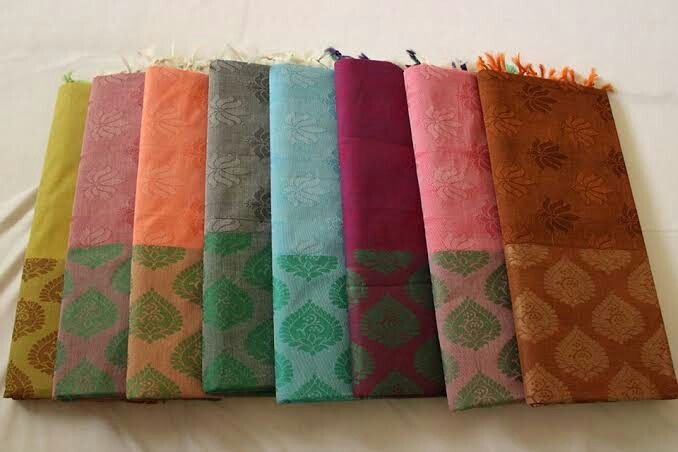
Kovai Cora Cotton
In the bustling landscape of Coimbatore—the “Manchester of South India”—there exists a fabric that defies the heavy, stifling heat of the tropics with the grace of a mountain breeze. This is Kovai Cora Cotton, a textile marvel that represents a sophisticated marriage between the strength of superior cotton and the ethereal sheen of traditional silk. For centuries, this weave has been the silent choice of the discerning woman, offering a drape that is as light as a whisper yet as resilient as the heritage of the Kongu Nadu region.
The Genesis: A Meeting of Two Worlds
The story of Kovai Cora (or Kora) cotton is rooted in the late medieval prosperity of the Coimbatore region. While Coimbatore became globally famous for its massive spinning mills during the British era, the heart of its artisanal identity remained in the hands of the Devanga weaving community. These master weavers were the pioneers who first experimented with blending two seemingly opposite fibers.
By the early 20th century, the technique was perfected. They took 60% high-quality silk warp and interlaced it with 40% superior cotton weft. The result was a “Cora” or “Kora” (meaning raw or unbleached in its original sense) texture—a fabric that possessed the structural integrity of cotton but shimmered with the understated luster of silk. Unlike the heavy, opulent Kanjeevarams, the Kovai Cora was designed for the climate of the Deccan: breathable, durable, and effortlessly elegant.
The Architecture of the Loom: Precision in Every Thread
Walking through the narrow lanes of Sirumugai, the primary hub of Cora cotton production, one is greeted by the rhythmic, percussive clacking of wooden handlooms. To create a single Kovai Cora saree is a marathon of patience that takes approximately three to five days.
The process is a delicate balancing act. Because cotton and silk react differently to moisture and tension, the weaver must maintain a precise hand. The defining feature of these sarees is the bold, vibrant border and the lavish pallu. While the body of the saree often remains simple—featuring subtle checks (Kottadi) or stripes—the borders are a canvas for traditional Tamil iconography. Motifs of peacocks (Mayil), parrots (Kili), and the sacred temple towers (Gopuram) are woven using a technique called Korvai, where the border and body are joined with such precision that the seam is virtually invisible to the naked eye.
A Shield of Heritage: The GI Tag and Beyond
For decades, the Kovai Cora cotton industry faced a silent crisis. The rise of powerlooms and cheap synthetic imitations threatened to erase the handloom legacy. In a landmark move to protect this ancestral craft, the Government of India granted Kovai Cora Cotton the Geographical Indication (GI) Tag in 2014-15.
This legal shield ensures that only sarees woven within the certified clusters of Coimbatore, Tiruppur, and Erode—adhering to the traditional silk-cotton blend—can carry the prestigious name. Today, over 80 co-operative societies serve as authorized guardians of this brand. The GI tag did more than just protect a name; it revitalized a community. As of 2026, there is a renewed interest among younger generations to return to the loom, driven by a global shift toward sustainable, slow fashion.
The Modern Renaissance: From Temples to Boardrooms
As we navigate 2026, Kovai Cora cotton is undergoing a stylistic transformation. No longer confined to the wardrobes of grandmothers or traditional temple visits, the fabric has found its way into the modern boardroom. Its “crispness”—a quality where the saree holds its pleats perfectly for hours—makes it the ideal choice for professional women who seek comfort without sacrificing authority.
Modern designers are now experimenting with Ganga-Jamuna borders (two different colors on the top and bottom edges) and contemporary geometric patterns, moving away from purely traditional motifs to cater to a global audience. Whether it is a summer wedding in Chennai or a corporate event in Bangalore, the Kovai Cora saree remains a symbol of “Quiet Luxury”—a garment that doesn’t need to shout to be noticed.
The Future of the Weave
The survival of Kovai Cora cotton is a testament to the resilience of the Kongu weavers. Despite the competition from “Soft Silk” and mass-manufactured fabrics, the sheer comfort of a hand-spun Cora cotton remains unmatched. It is a fabric that breathes with the wearer, cooling the skin in the summer and providing a soft warmth in the monsoon.
To wear a Kovai Cora is to wear a piece of Coimbatore’s soul. It is a reminder that in our rush toward automation, some things—the touch of a hand-shuttle, the smell of starched cotton, and the glow of raw silk—are irreplaceable.
Kovai Cora Cotton, Coimbatore Silk Cotton Saree, Kora Cotton GI Tag, Traditional Tamil Nadu Handlooms, Sirumugai Saree Weavers.
History of Kovai Cora cotton sarees, benefits of silk cotton blend fabric, authentic Coimbatore cotton sarees online, traditional Korvai weaving technique, sustainable handloom fashion South India.
#KovaiCora #CoimbatoreCotton #HandloomSaree #GITagIndia #SustainableFashion #KonguNadu #SouthIndianWeaves #SlowFashion #SilkCotton #SareeHeritage