Description
Who truly creates the music: the legendary artist on stage, or the invisible hands that built the instrument? 🥁✨
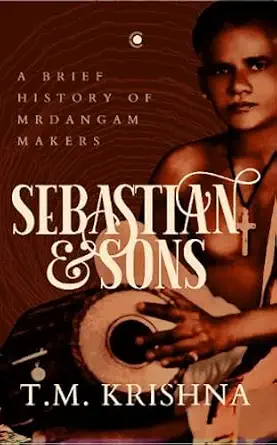
The mridangam is the undisputed heartbeat of the Karnatik stage. Yet, shockingly, the highly evolved instrument as we know it today is barely a century old. While history has immortalized legendary players like Palghat Mani Iyer, it has almost entirely erased the brilliant artisans who actually made their music possible. In his groundbreaking book Sebastian and Sons: A Brief History of Mridangam Makers, acclaimed musician T.M. Krishna embarks on a fascinating investigation to meet the invisible keepers of this ancient tradition. He pulls back the curtain on a grueling intellectual, aesthetic, and physical process that requires a highly tuned ear to translate a musician’s abstract ideas into the corporeal reality of a flawless drum.
At the core of this book is a profound irony deeply rooted in caste and tradition. The Karnatik stage is a space heavily dominated by the Brahmin community, where the cow is considered sacred and its slaughter a taboo. Yet, the exquisite nadam (tone) of the mridangam relies entirely on cow, buffalo, and goat hide. None of the celebrated Brahmin musicians possessed the knowledge or willingness to work with these materials. Instead, this highly nuanced artistry—curing, cutting, stretching, binding, and braiding the skins—was left entirely to marginalized Dalit Christian communities, such as the legendary Parlandu (Sebastian), who crafted instruments for the greatest maestros of his time.
Despite their irreplaceable contribution to the art form, the intricate craftsmanship of these families is frequently dismissed as mere “labor” or “repair” work. Sebastian and Sons boldly explores the world of these marginalized artists, documenting their history, lore, and lived experiences. Krishna forces the Karnatik community to confront its own uncomfortable contradictions, offering a more organic and holistic understanding of the very music they revere.
This book is a necessary, eye-opening read that celebrates true traditional craftsmanship and the unsung artisans of Tamil Nadu. It is available now at our physical store in Nerkundram—drop by during our upcoming monthly heritage and historical book discount sale to pick up your copy, or order it online anytime at Heritager.in!
🖋️ About the Author
T.M. Krishna is a prominent Karnatik vocalist, author, and socio-cultural activist. Known for pushing the boundaries of traditional Karnatik music and challenging its inherent caste and class barriers, he is a recipient of the prestigious Ramon Magsaysay Award. He is also the author of the highly acclaimed book A Southern Music: The Karnatik Story.
🎯 Who Needs to Read This?
Music & Culture Enthusiasts: Anyone deeply invested in Karnatik music who wants to understand the complete, unvarnished history of the art form.
Sociology & History Buffs: Readers fascinated by the complex intersections of caste, religion, and traditional arts in South India.
Supporters of Heritage Craftsmanship: Those who appreciate the immense, often undocumented skill required to create traditional, handcrafted instruments.
Have you ever thought about the artisans behind the instruments in classical music? Share your thoughts below! 👇
#TMKrishna #SebastianAndSons #Mridangam #KarnatikMusic #CarnaticMusic #SouthIndianHistory #TraditionalCraftsmanship #DalitHistory #HeritagerBookstore #Nerkundram #BookstagramIndia #HeritageBooks #NonFictionReads #IndianClassicalMusic
📚 Top Goodreads-Style Comments to Boost Engagement
5 Stars – An absolute eye-opener about Karnatik music! “As someone who grew up attending sabhas in Chennai, this book completely shattered my perspective. T.M. Krishna doesn’t hold back in exposing the hypocrisy of the Karnatik world—where the artists refuse to touch the hide, yet demand absolute perfection from the Dalit Christian makers whose names they won’t even acknowledge. The story of Parlandu (Sebastian) and his relationship with Palghat Mani Iyer is fascinating. A brilliant piece of investigative history.”
5 Stars – A masterclass in documenting invisible labor “This isn’t just a book about music; it is a profound sociological study of caste, labor, and art in South India. Krishna meticulously details the actual process of making a mridangam—from selecting the right cow or buffalo skin to the complex braiding. You realize that these makers aren’t just laborers; they are acoustic engineers and artists in their own right. Everyone who loves traditional Indian craftsmanship needs to read this.”
4 Stars – Dense but incredibly important “The amount of research Krishna poured into finding these marginalized families across Tamil Nadu and Andhra Pradesh is commendable. The book gets very technical at times when discussing the curing of the hides and the tension of the straps, but that level of detail is necessary to prove just how skilled these makers are. It forces you to rethink who truly ‘owns’ the music we hear on stage.”
ISBN ; 9789395073585
PAPERBACK